
Highway Safety Improvement Program
Our Vision: A transportation system where every journey is completed safely.
The Highway Safety Improvement Program (HSIP)
funded through the Infrastructure Investment and Jobs (IIJA) Act, is designed to substantially reduce traffic fatalities and serious injuries on all public roadways, including non‑state-owned routes and roads on tribal lands.
The foundation of NMDOT’s Highway Safety Improvement Program, The New Mexico Strategic Highway Safety Plan (SHSP) is a unified, data‑driven commitment to preventing fatalities and reducing serious injuries on New Mexico’s roadways.
The Strategic Highway Safety Plan (SHSP)
incorporates the Safe System Approach (SSA) and its core principles, which guide the Highway Safety Improvement Program. This approach promotes an aspirational, proactive safety culture—one that builds multiple layers of protection to reduce the severity of crashes, particularly for people walking and biking. Instead of accepting traffic fatalities as unavoidable, the SSA encourages shared responsibility and collaboration among partners to collectively advance toward the goal of zero deaths.
The Safe System Approach
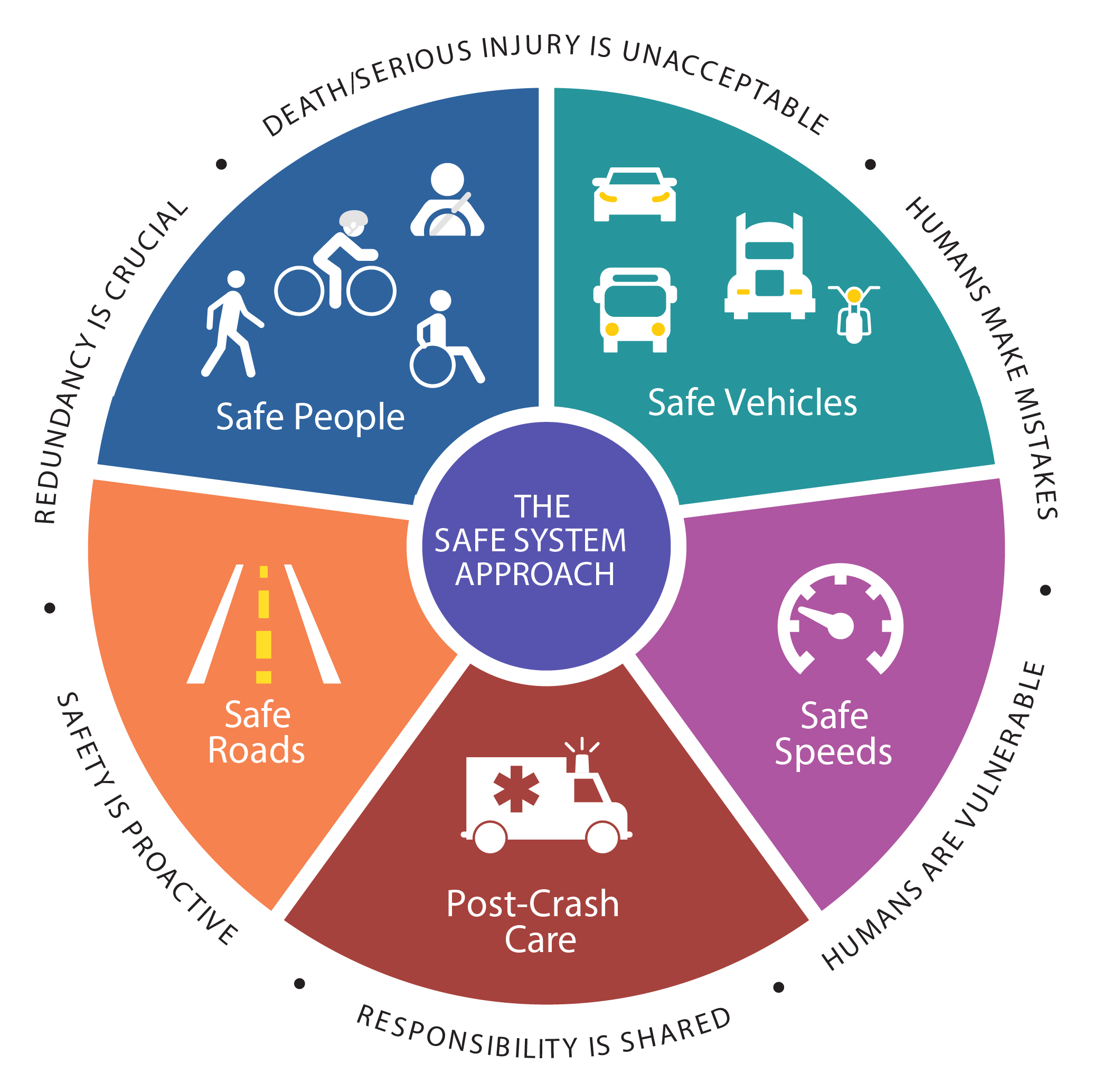
Death and Serious Injuries are Unacceptable
While no crashes are desirable, the Safe System approach prioritizes crashes that result in death and serious injuries, since no one should experience either when using the transportation system.
Humans Make Mistakes
People will inevitably make mistakes that can lead to crashes, but the transportation system can be designed and operated to accommodate human mistakes and injury tolerances and avoid death and serious injuries.
Humans are Vulnerable
People have limits for tolerating crash forces before death and serious injury occurs; therefore, it is critical to design and operate a transportation system that is human-centric and accommodates human vulnerabilities.
Responsibility is Shared
All stakeholders (transportation system users and managers, vehicle manufacturers, etc.) must ensure that crashes don’t lead to fatal or serious injuries.
Safety is Proactive
Proactive tools should be used to identify and mitigate latent risks in the transportation system, rather than waiting for crashes to occur and reacting afterwards
Redundancy is Crucial
Reducing risks requires that all parts of the transportation system are strengthened, so that if one part fails, the other parts still protect people.
Resource Links
2026 Strategic Highway Safety Plan

Web Map Applications (GIS)
Road Safety Audit Guidance Manual
2023 NMDOT Vulnerable Road User Safety Assessment
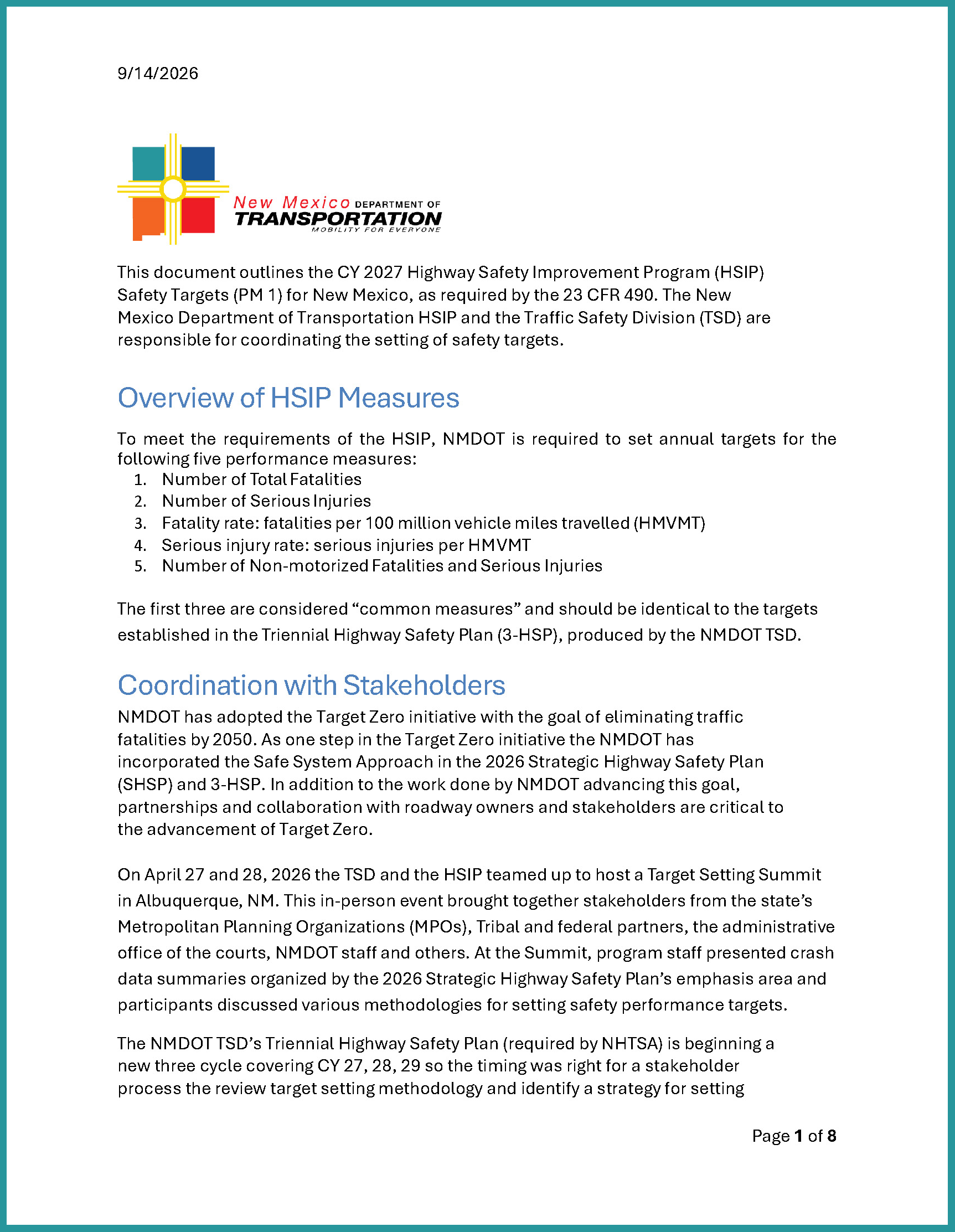
2027 NMDOT HSIP Target Report
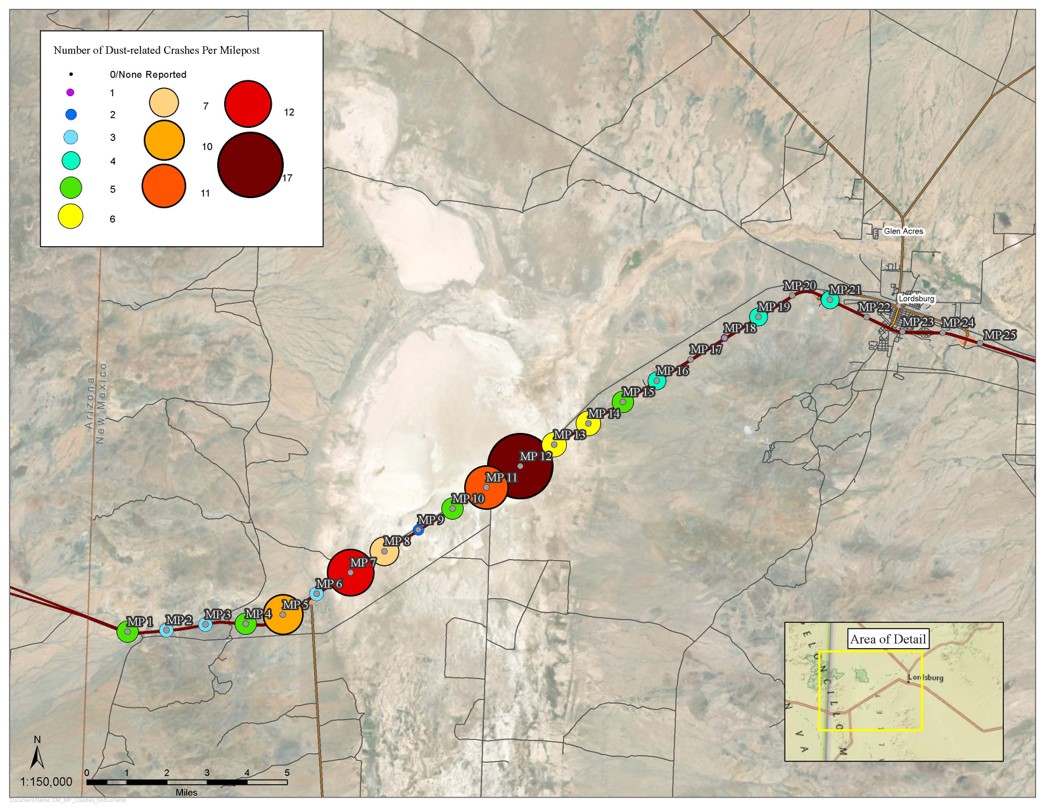
Crash Data Request
HSIP Contacts
Jason G. Coffey, HSIP Manager
505-469-7491
Jason.Coffey@dot.nm.gov
Nathan Wagliardo, HSIP Coordinator
505-479-1538
Nathan.Wagliardo@dot.nm.gov
Travis Martínez, HSIP Technician
505-538-6497
Travis.Martinez@dot.nm.gov