
Statewide Bridge Art
Where New Mexico’s roads, landscapes and stories meet.
Across New Mexico, bridges, interchanges, and roadside structures do more than connect people from place to place. They help tell the story of the communities, landscapes, histories, and cultures that shape our state.
Through select transportation projects, the New Mexico Department of Transportation (NMDOT) incorporates public art and aesthetic treatments that make infrastructure safe, functional, meaningful, and rooted in place. These treatments may include color, texture, patterns, murals, sculptural elements, landscaping, and other design features developed in coordination with artists, communities, Tribal partners, designers, and transportation professionals.
Key Stats
Featured Locations
Corridors
Communities/Regions
Art Along the Road
New Mexico’s transportation system is part of the visual experience of the state. For residents, visitors, and daily travelers, bridges and roadside structures often become lasting landmarks within a community or corridor.
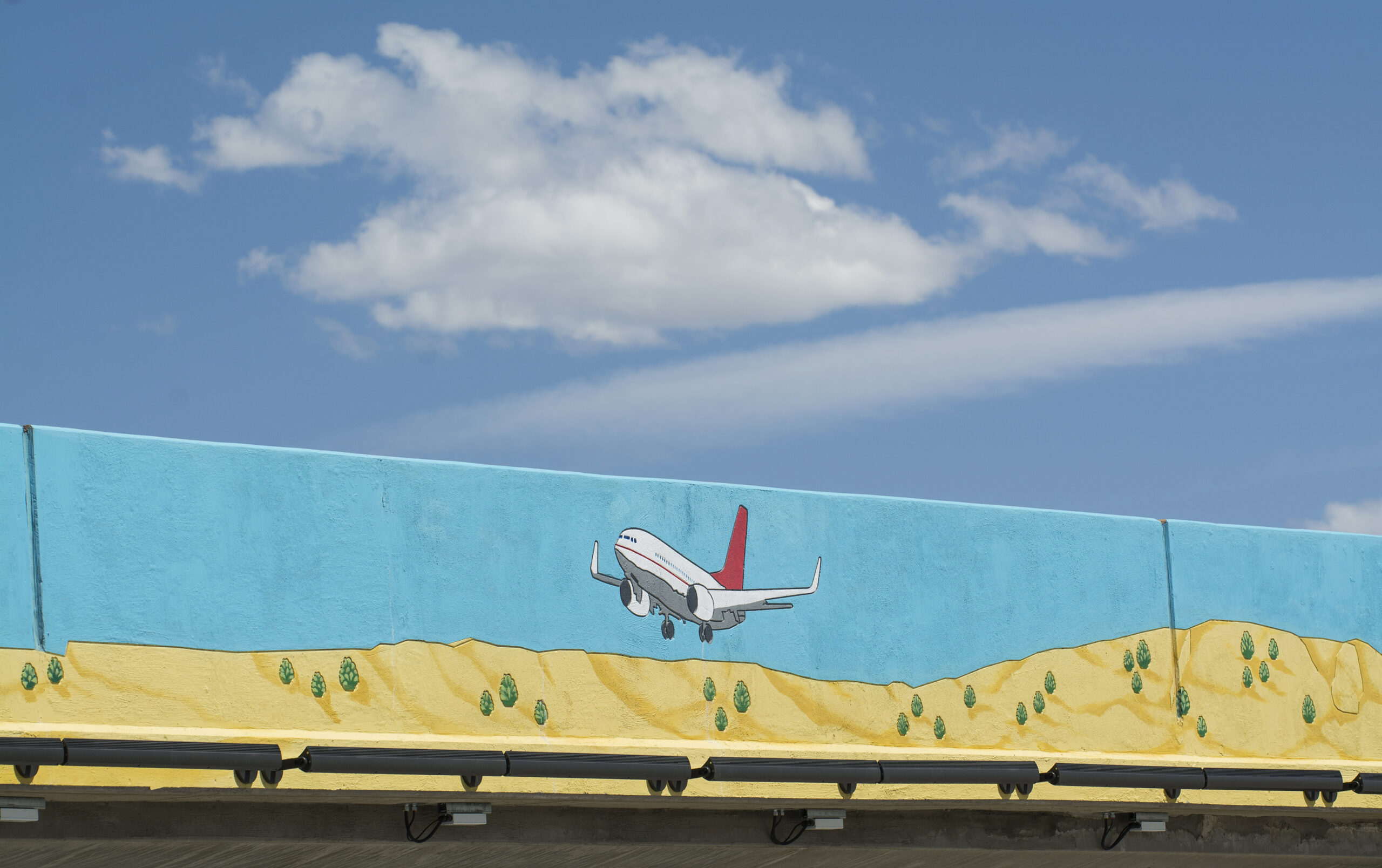
Statewide bridge art helps create a stronger sense of place by reflecting local identity, honoring cultural and natural landscapes, and adding visual interest to highly visible transportation features. Each installation offers a unique view of New Mexico, from desert landscapes and wildlife to local history, traditional motifs, and community gateway themes.
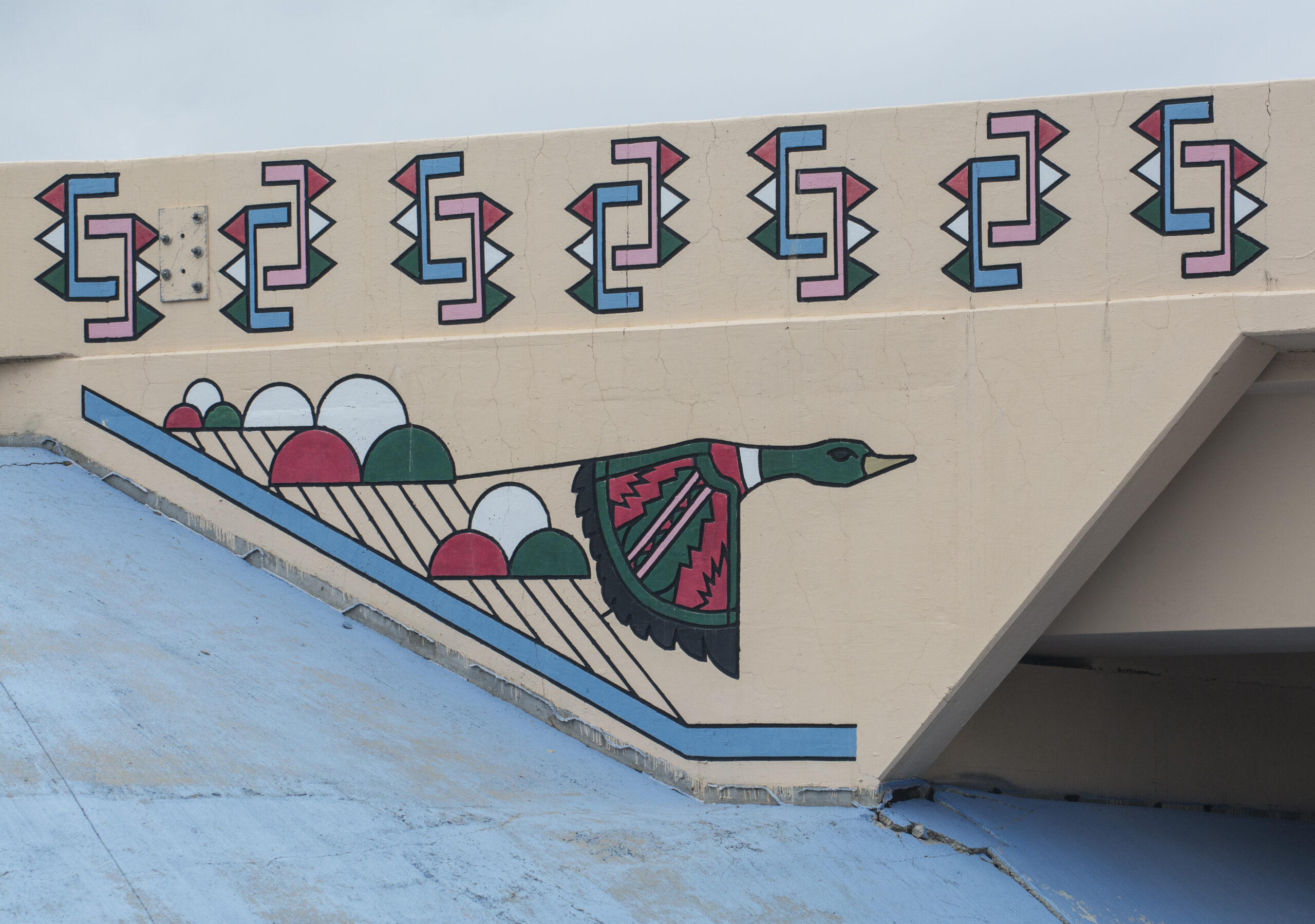
A Distinctive Statewide Approach
NMDOT’s statewide approach creates opportunities for site-specific aesthetic treatments that reflect New Mexico’s diverse cultures, histories, landscapes, and communities across the transportation system.
Explore Bridge Art Across New Mexico
Use the interactive map to explore bridge art and aesthetic treatments located along highways, interchanges, and bridges across New Mexico. Map points may highlight a featured location, route, artwork theme, available photos, and artist or partner information when available.
The map provides a statewide overview of public art and aesthetic treatments within the transportation system. Use the navigation tools to discover both familiar corridors and installations you may not have experienced before.
A Statewide Gallery of Roadside Art
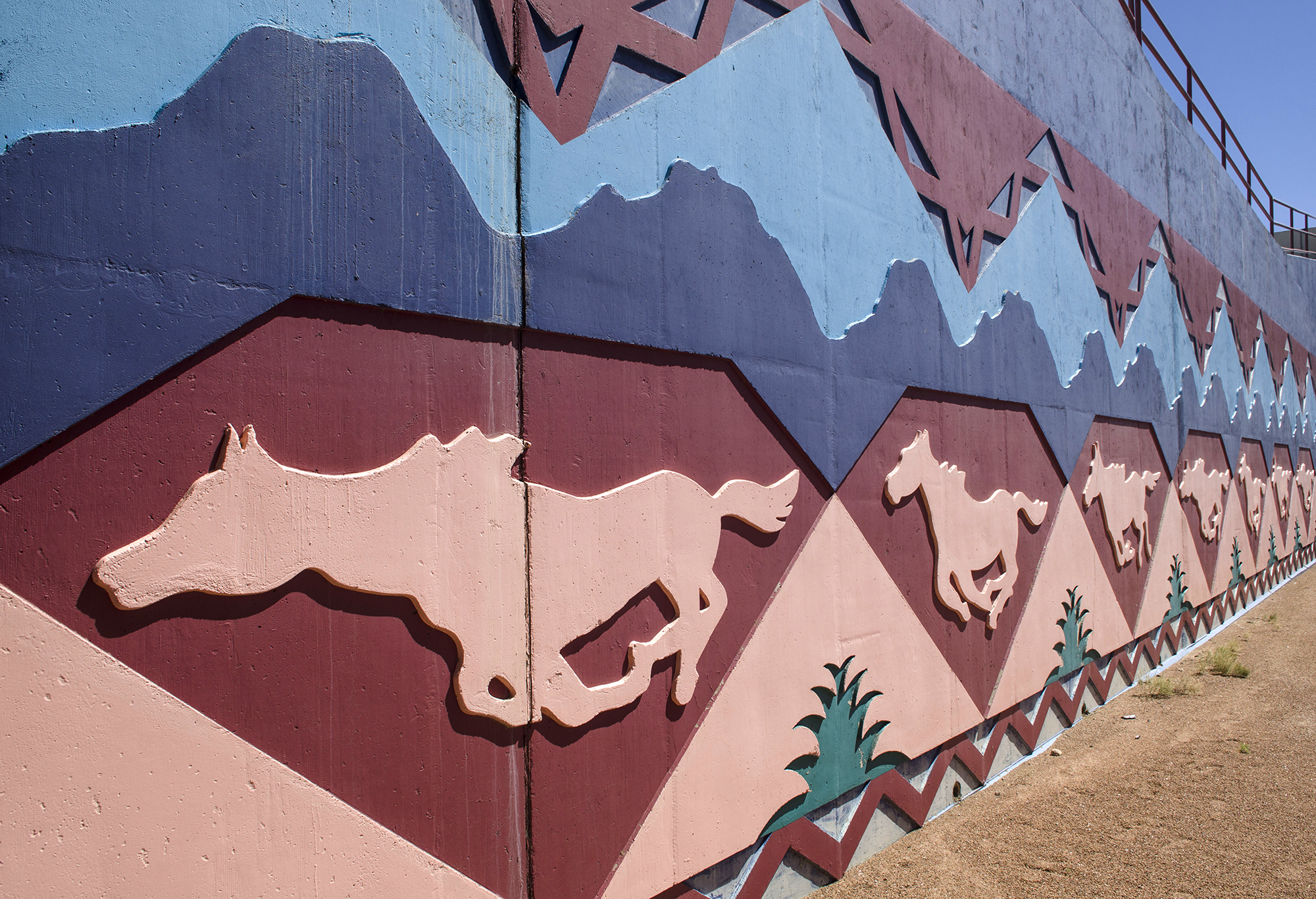
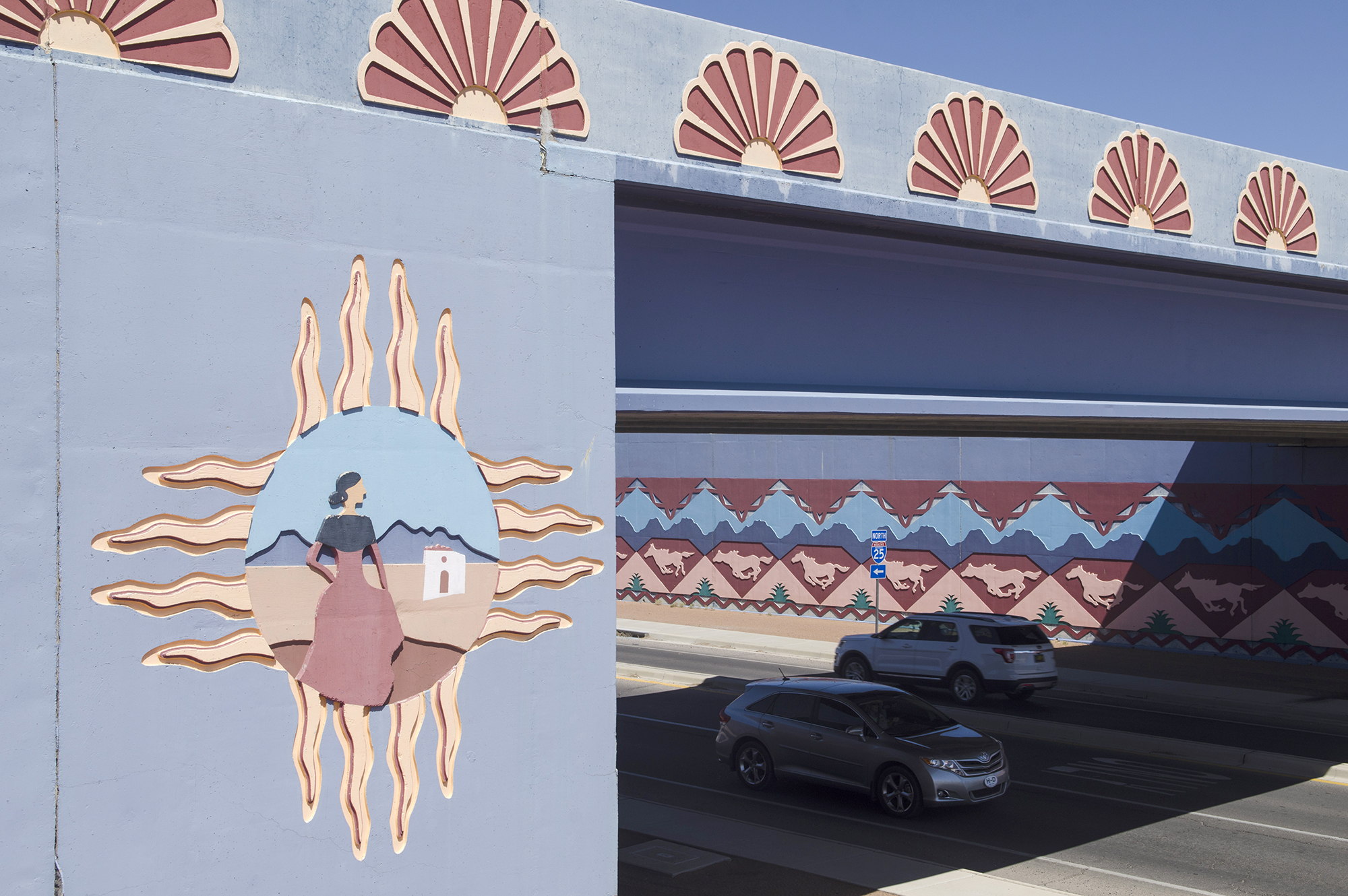
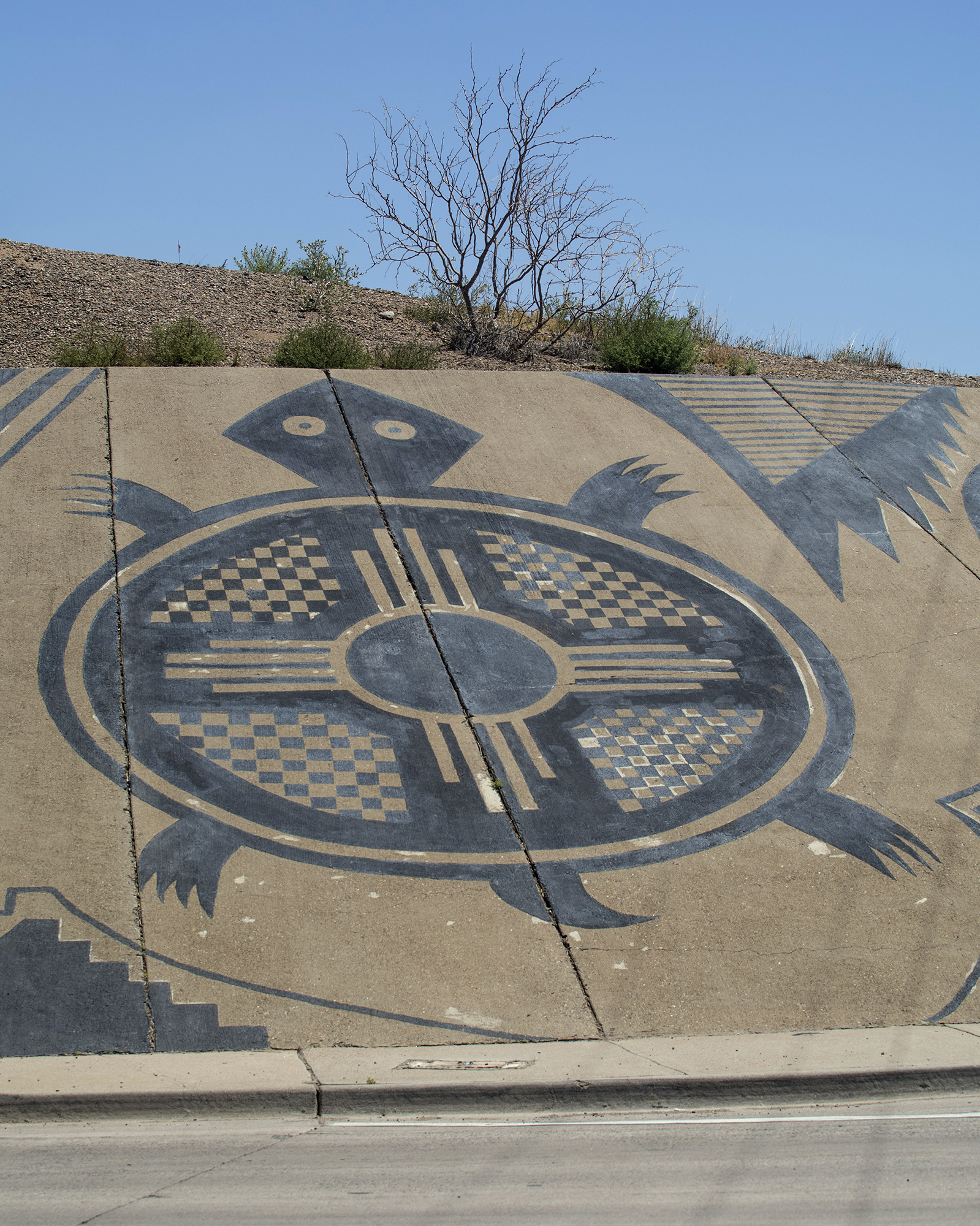
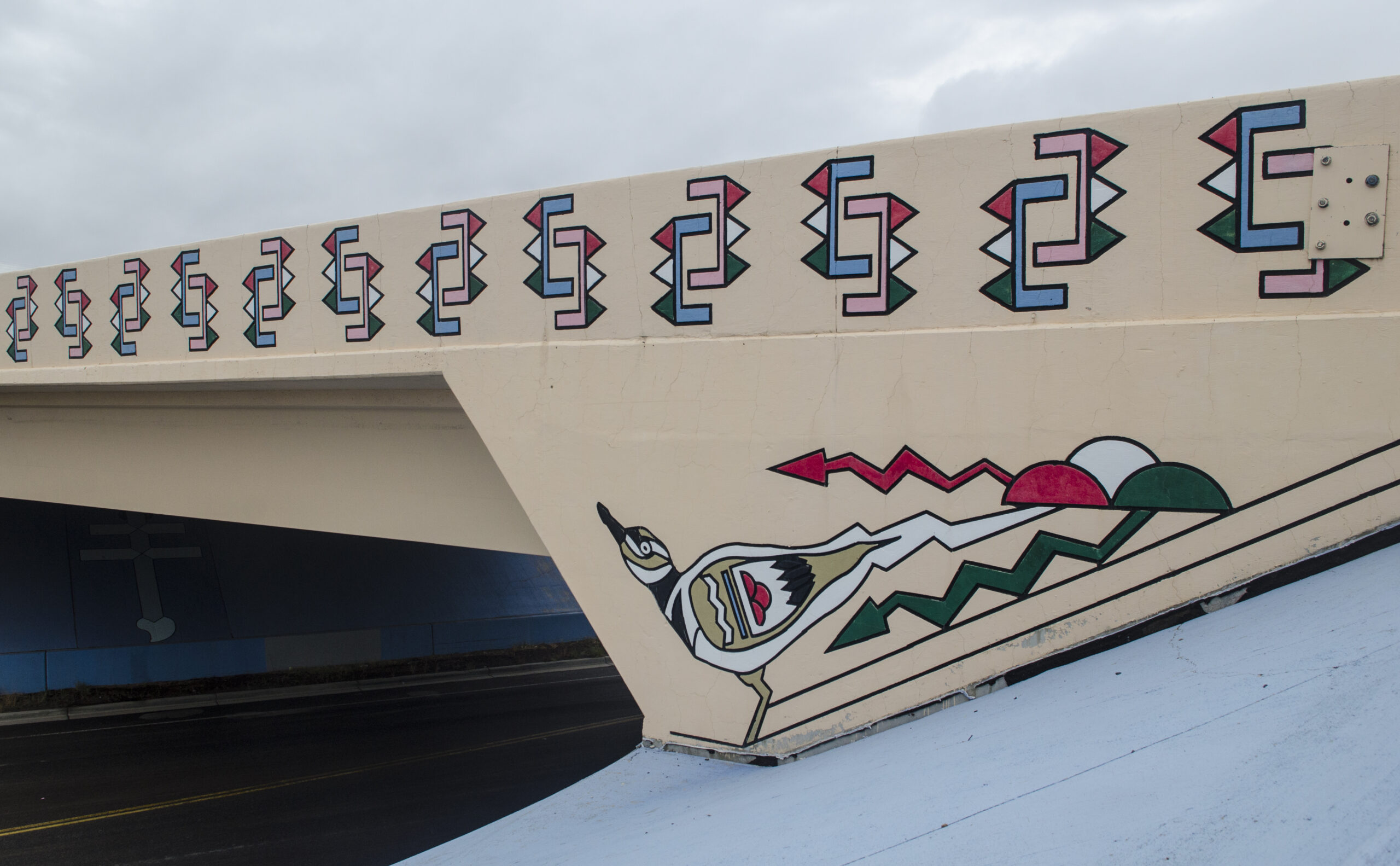
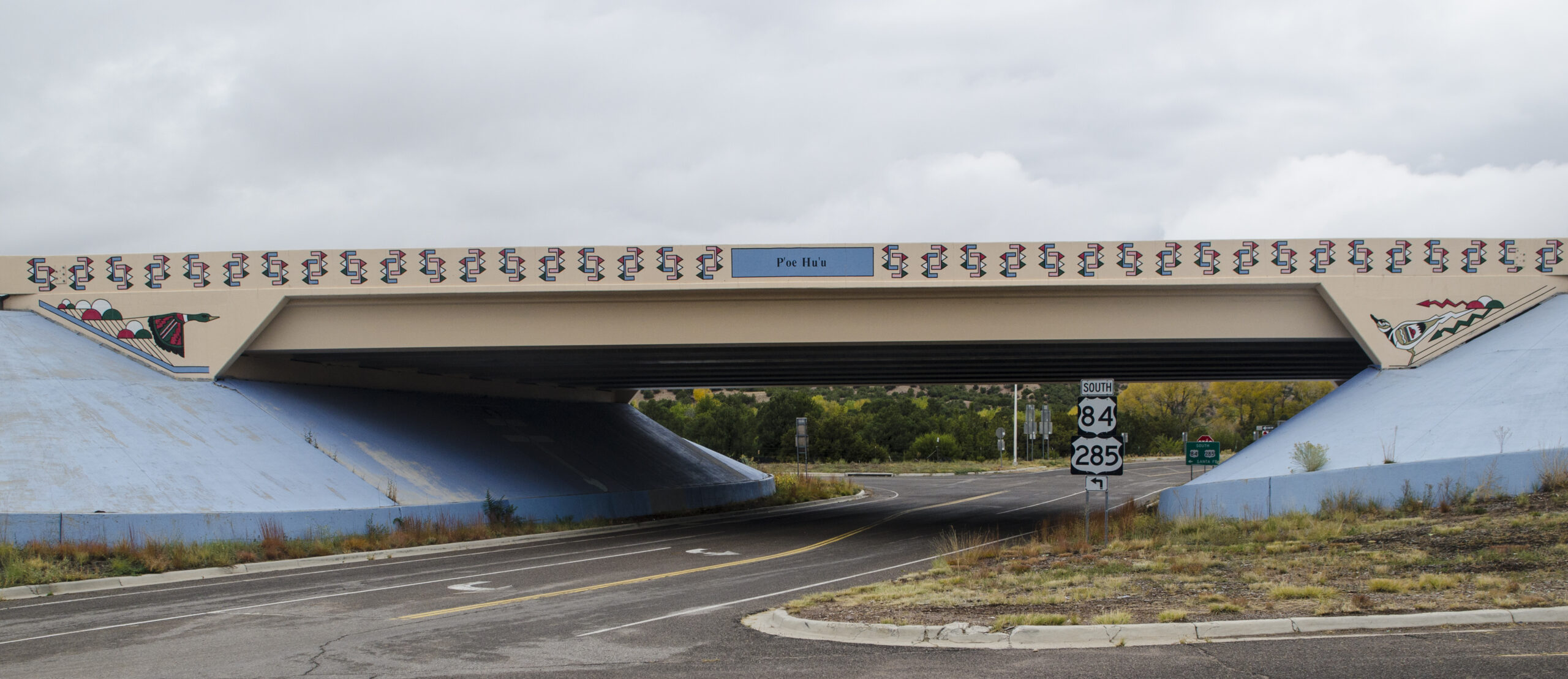
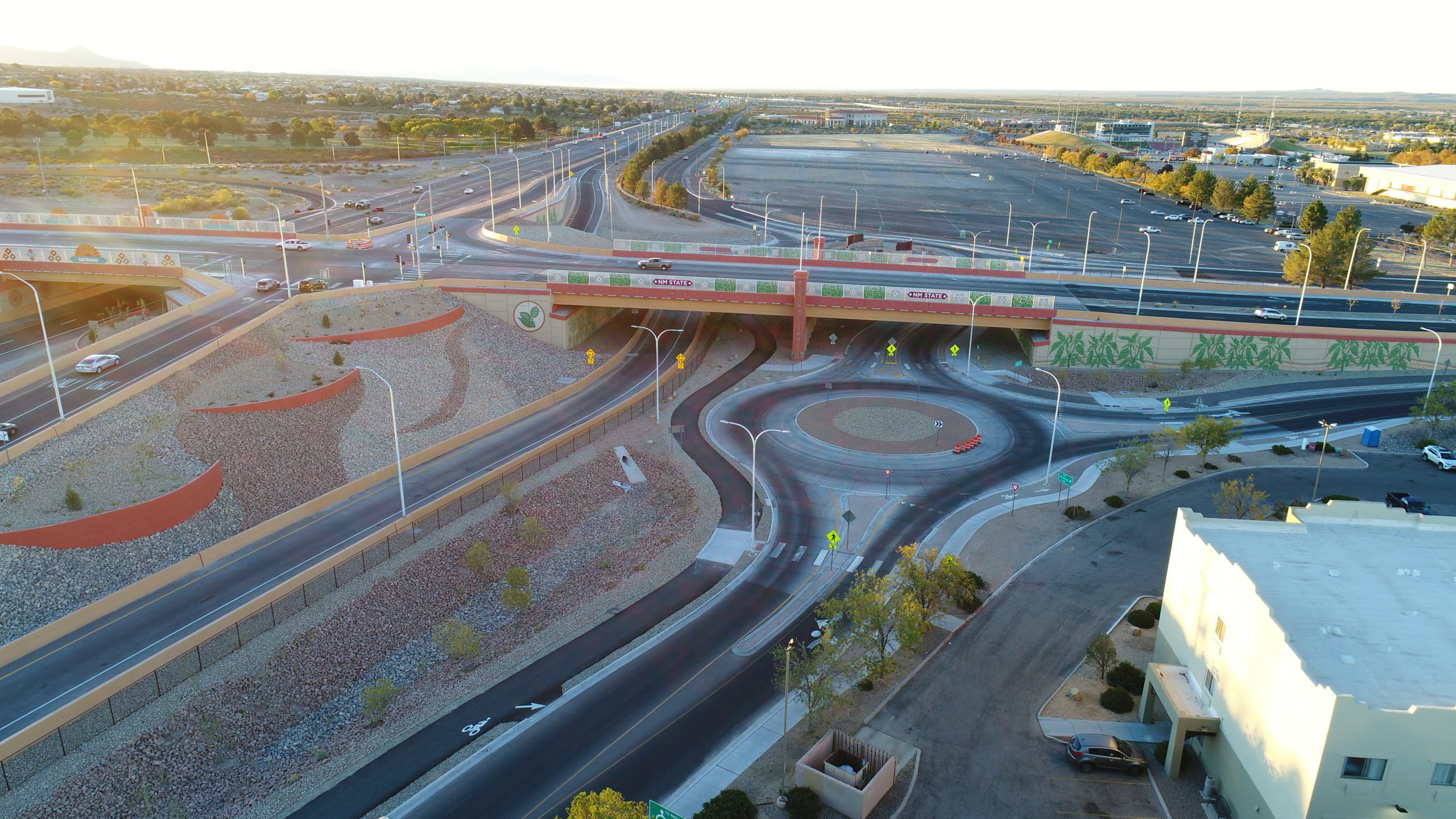
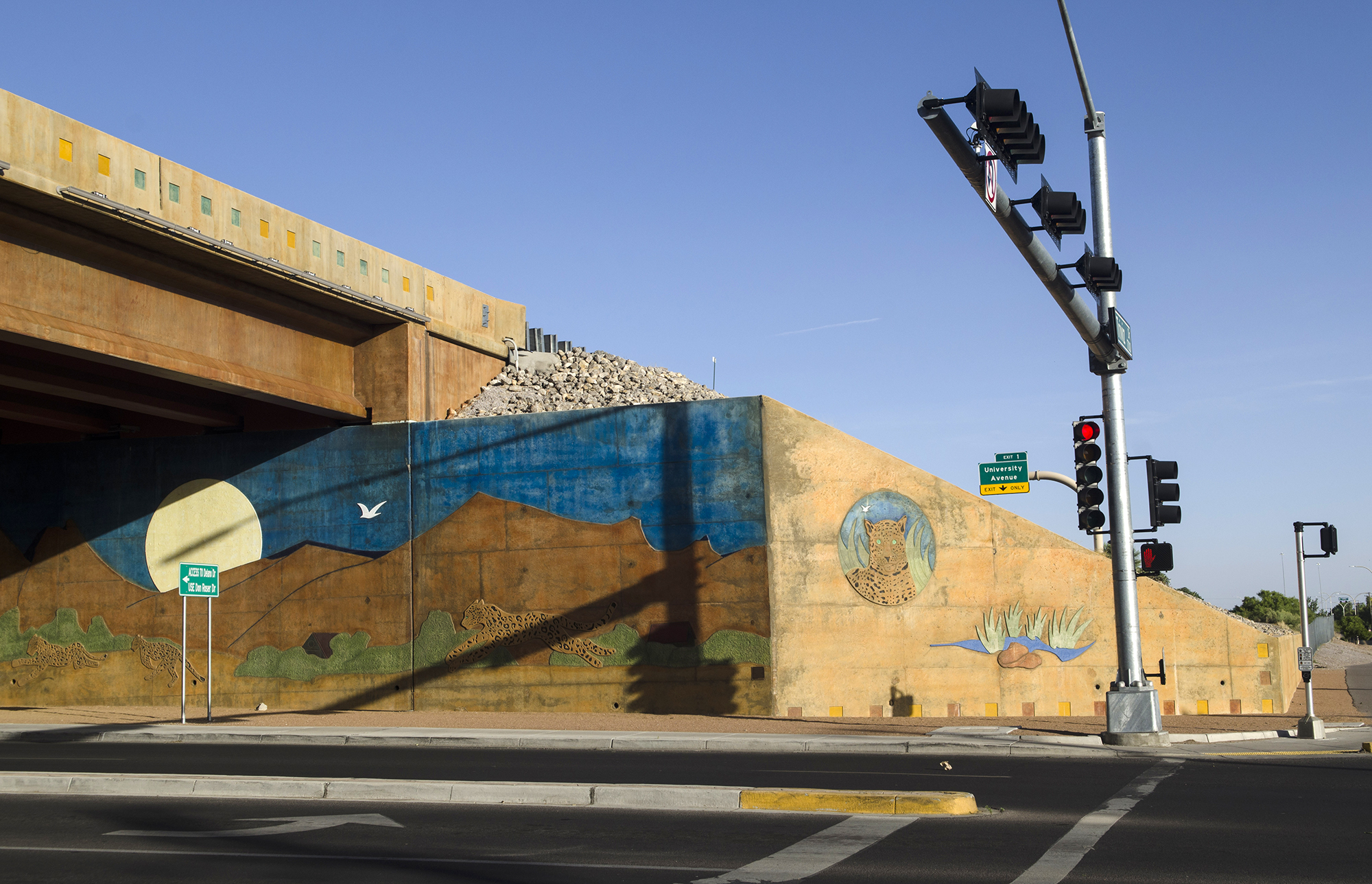
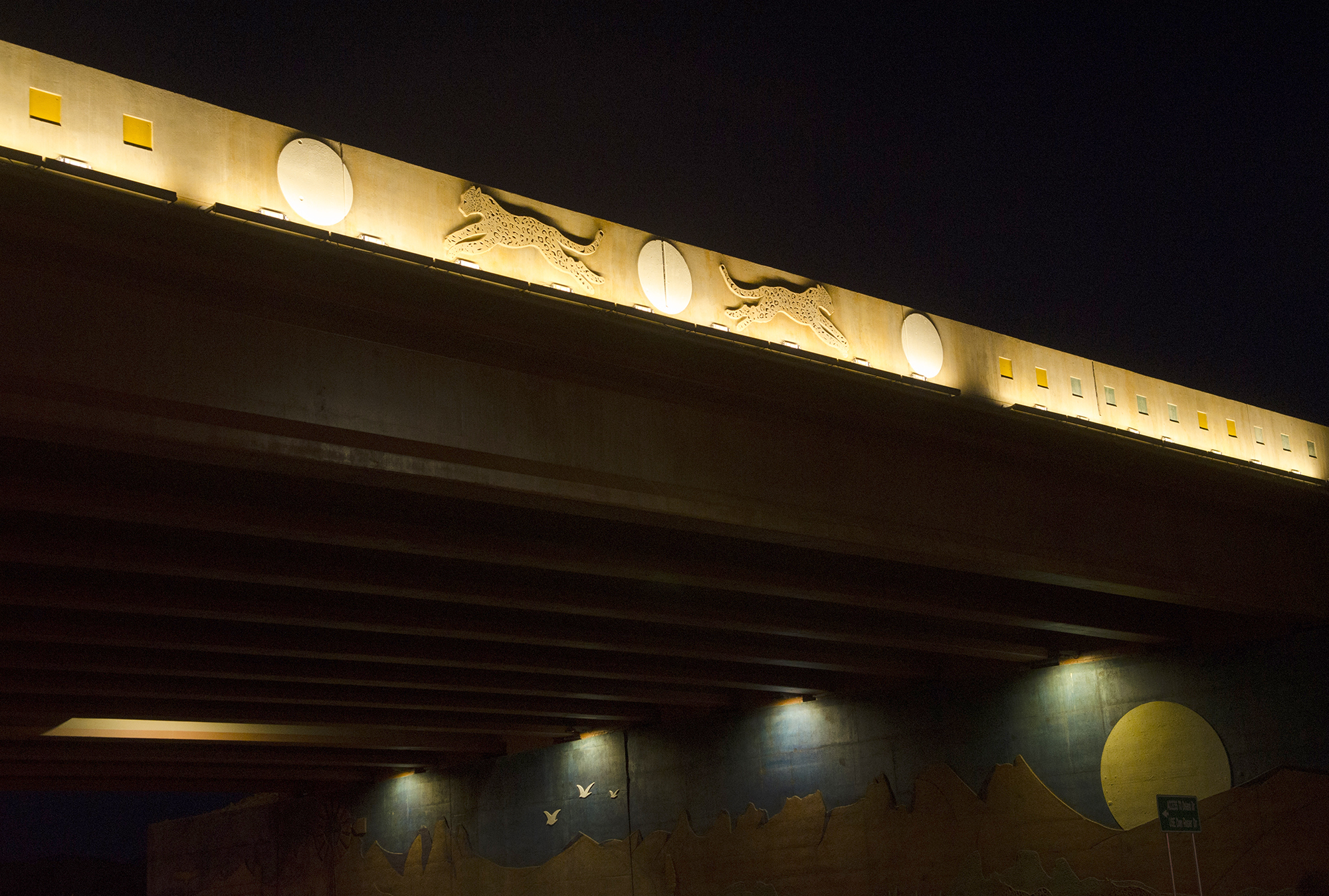
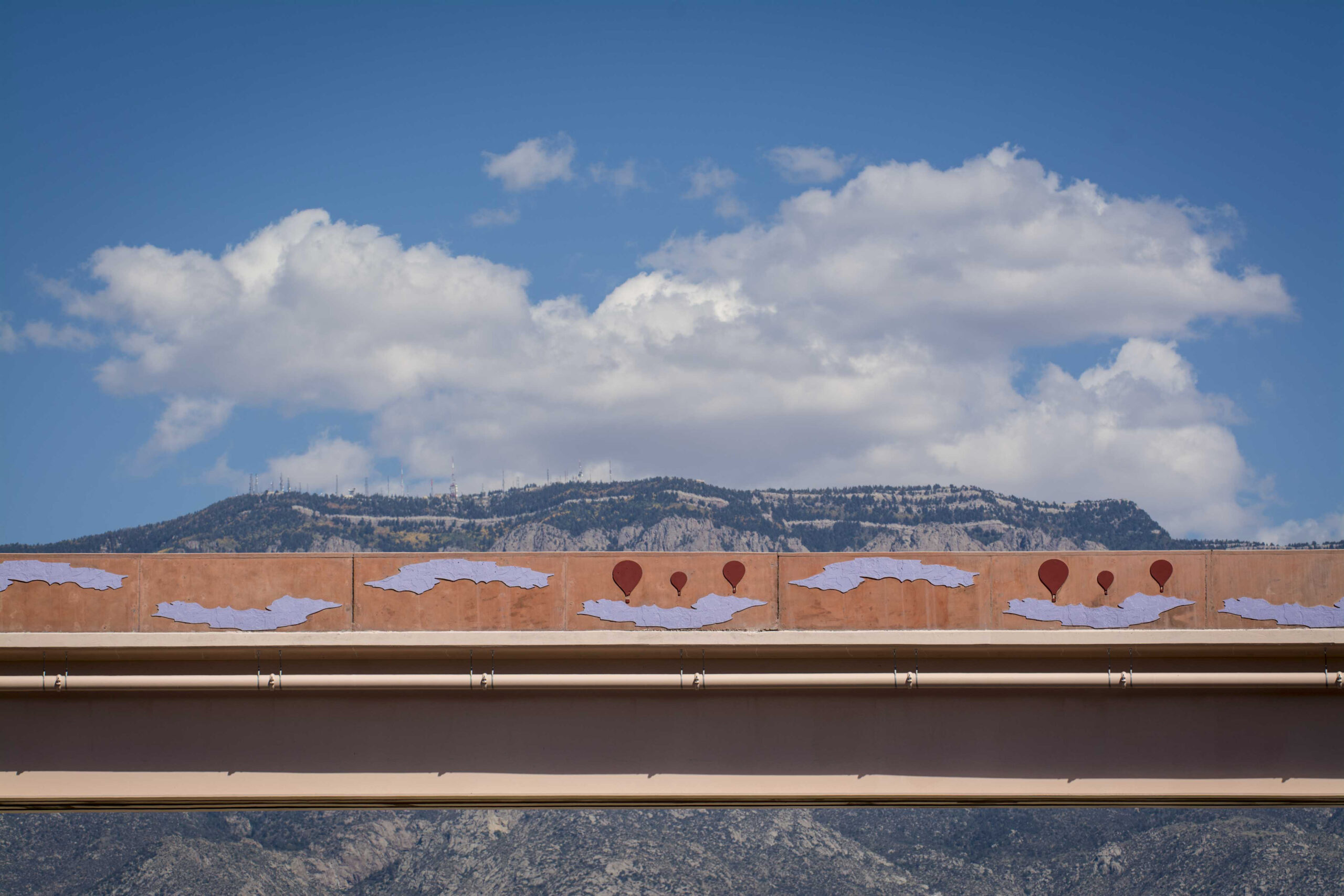
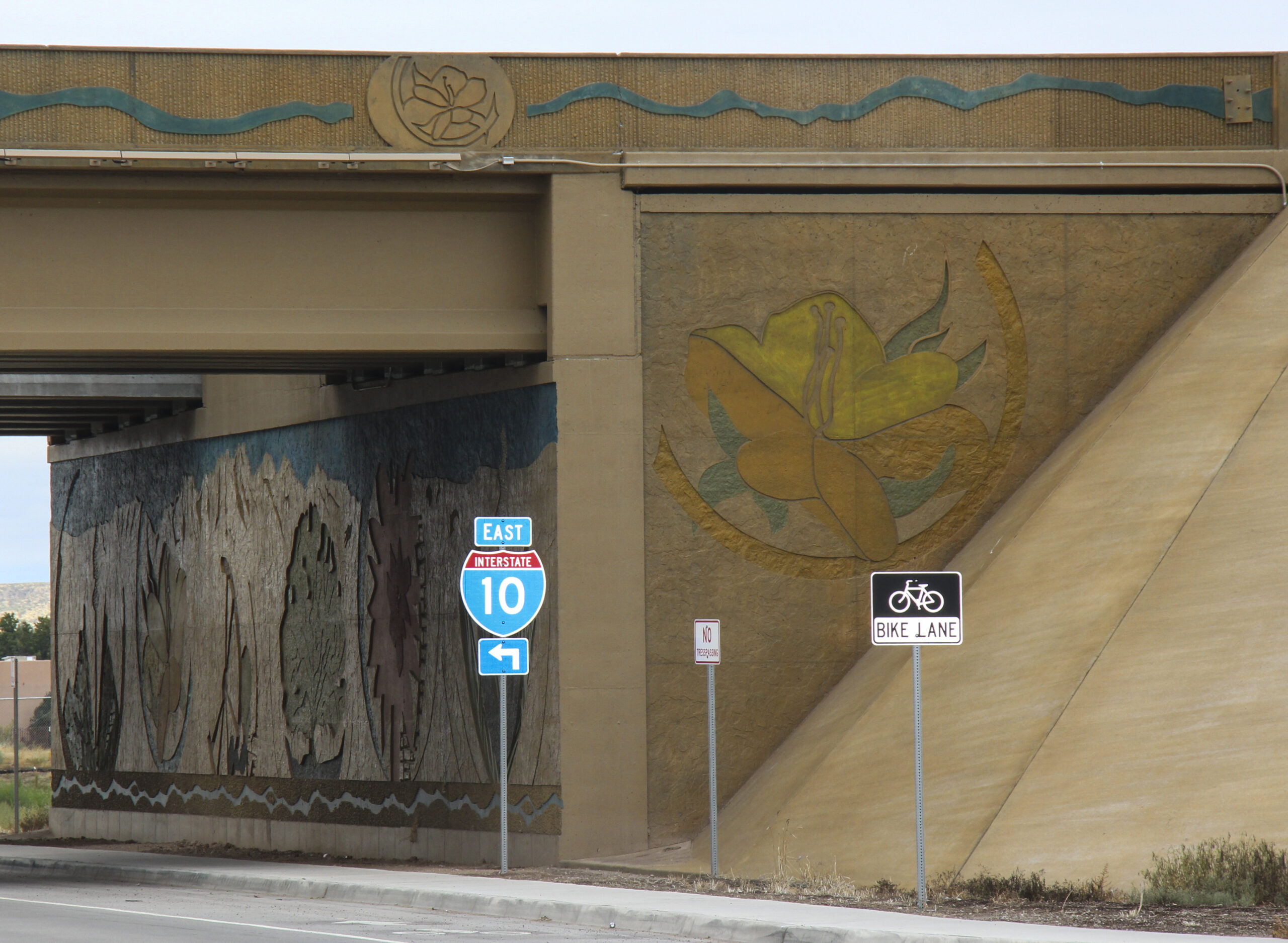
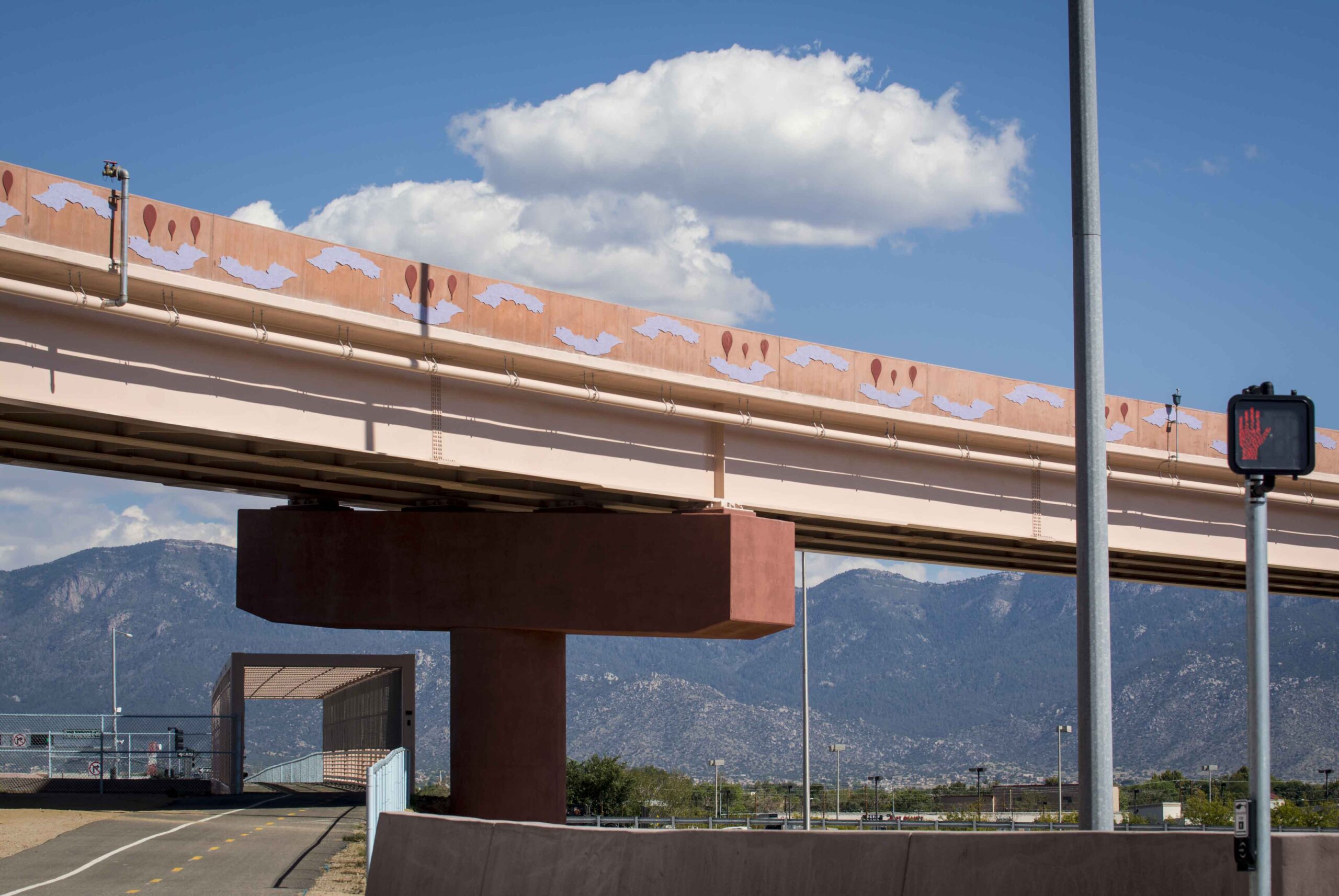
Browse the photos below to see how art and aesthetic treatments are incorporated into bridges, interchanges, abutments, slope paving, piers, walls, railings, and other structural elements throughout the state.
Some installations use color, texture, and pattern to complement the surrounding landscape. Others incorporate commissioned artwork, cultural references, local symbols, wildlife, or gateway features that create a memorable sense of arrival.
Why Bridge Art Matters
Transportation infrastructure is highly visible and can remain part of a community for generations. When appropriate, aesthetic and artistic treatments can help projects reflect community character, respond to surrounding landscapes, and complement historic settings, scenic corridors, and community gateways.
Reflect Local Identity
Art and aesthetic treatments can draw from local history, culture, landscapes, wildlife, and community traditions to create a stronger connection between infrastructure and place.
Enhance the Travel Experience
Color, texture, artwork, landscaping, and gateway features can add visual interest and create memorable points of arrival for residents and visitors.
Respond to Community Context
Aesthetic treatments can help transportation features better complement scenic corridors, historic settings, community gateways, and other visually sensitive areas.
Create Lasting Public Value
Because bridges and other transportation structures may remain in place for decades, thoughtful design can contribute to a lasting sense of place while maintaining the safety and function of the transportation system.
This is more than a visual enhancement. Bridge art can help infrastructure reflect the culture, landscape, and identity of the communities it serves.

Shaped by Community Input
Community input can help NMDOT understand the themes, visual character, and design preferences that resonate with communities. The Aesthetics StoryMap and active Color Palette Survey provide opportunities to explore aesthetic concepts and gather feedback on visual preferences, including color palettes and mood boards.
How Bridge Art Comes to Life
Not every transportation project includes public art or aesthetic treatments. NMDOT considers the setting, project type, visual character, community context, and the visibility of structural elements when determining whether aesthetic treatments may be appropriate.
Projects involving bridges, retaining walls, slope paving, noise walls, major landform changes, or highly visible structures may create opportunities for aesthetic consideration. In sensitive or meaningful settings, such as scenic corridors, historic districts, community gateways, or areas with strong public interest, a more detailed aesthetic approach may be considered.
From Color and Texture to Commissioned Artwork
Aesthetic treatments can range from simple design enhancements to detailed, commissioned artwork. The appropriate level depends on the project, location, community context, visual impact, budget, maintenance needs, and opportunities for artist or stakeholder involvement.
-
- Limited treatments may include color, texture, revegetation, or simple design details that fit the corridor context.
- Mid-level treatments may include cohesive design themes, landscaping, or aesthetic features across multiple project elements.
- Intensive treatments may include commissioned artwork, detailed landscaping, or locally guided design features that reflect strong community, cultural, or visual context.
Opportunities for Artists and Communities
When commissioned artwork is appropriate for a transportation project, NMDOT may use tools such as the CaFE system or a local stakeholder-guided process to solicit, review, and select artwork. These opportunities help connect transportation design with artists, communities, and local stories.
Artist involvement may include developing imagery, motifs, color concepts, sculptural elements, or other design features that can be incorporated into bridges, walls, railings, slope paving, or related transportation structures.
Community and stakeholder input can also help shape the themes, values, and visual direction of aesthetic treatments so the final design is connected to the place it represents.
Resources
Guide to Aesthetic Considerations
NMDOT’s Aesthetic Considerations for Structural Project Development, Execution, and Maintenance guide provides a framework for considering aesthetic and artistic treatments in transportation projects.
The guide outlines when treatments may be appropriate, how public involvement fits into the process, how artists may be selected, and how aesthetic considerations carry through planning, design, construction, and maintenance.
Download the Guide
Contact Us
Questions or More Information
For questions about statewide bridge art, aesthetic considerations, or artist opportunities, please contact NMDOT or visit the project resources linked on this page.
William Hutchinson,
Roadside and Community Design Section Manager
Phone: 505-795-1275
Email: Williams.hutchinson@dot.nm.gov
John Busemeyer,
Landscape and Revegetation Specialist/Environmental Scientist
Phone: 505-490-3985
Email: john.busemeyer@dot.nm.gov