
U.S. Highway 180 Corridor Safety Scoping Project
West of Silver City to East of Santa Clara (Milepost 111 to Milepost 123)
Control Number 1102290
PROJECT OVERVIEW
U.S. Highway 180 (US 180) is an important east–west route that runs from central Arizona through southern New Mexico and into northern Texas. In southwestern New Mexico, it connects the communities of Silver City, Bayard, and Hurley, and links to major highways such as I-10, NM 26, and NM 90.
The project corridor covers about 11 miles, from just south of Bayard (milepost 123) to just west of Silver City (milepost 111, see Figure 1). This section is mostly a divided, four-lane roadway, with speed limits ranging from 55 mph in rural areas to 35 mph in town centers. The corridor includes residential neighborhoods, commercial zones, and open spaces, serving local traffic as well as pedestrians and cyclists traveling to nearby schools, Western New Mexico University, sports facilities, and trails.
US 180 also plays a role in community events like the Tour of the Gila, a major cycling race that uses parts of this corridor and NM 90. Wildlife safety is another important concern—this section has been identified as New Mexico’s second-highest priority area for reducing wildlife–vehicle collisions (NMDOT, 2022).
Safety challenges along the corridor include vehicle crashes, wildlife conflicts, and limited infrastructure for pedestrians and bicyclists. The safety scoping effort aims to identify improvements that will reduce crashes, improve safety for all users, and enhance emergency response times. By addressing these issues, the project will help create a safer, healthier, and more connected corridor for everyone who lives, works, and travels in the area.
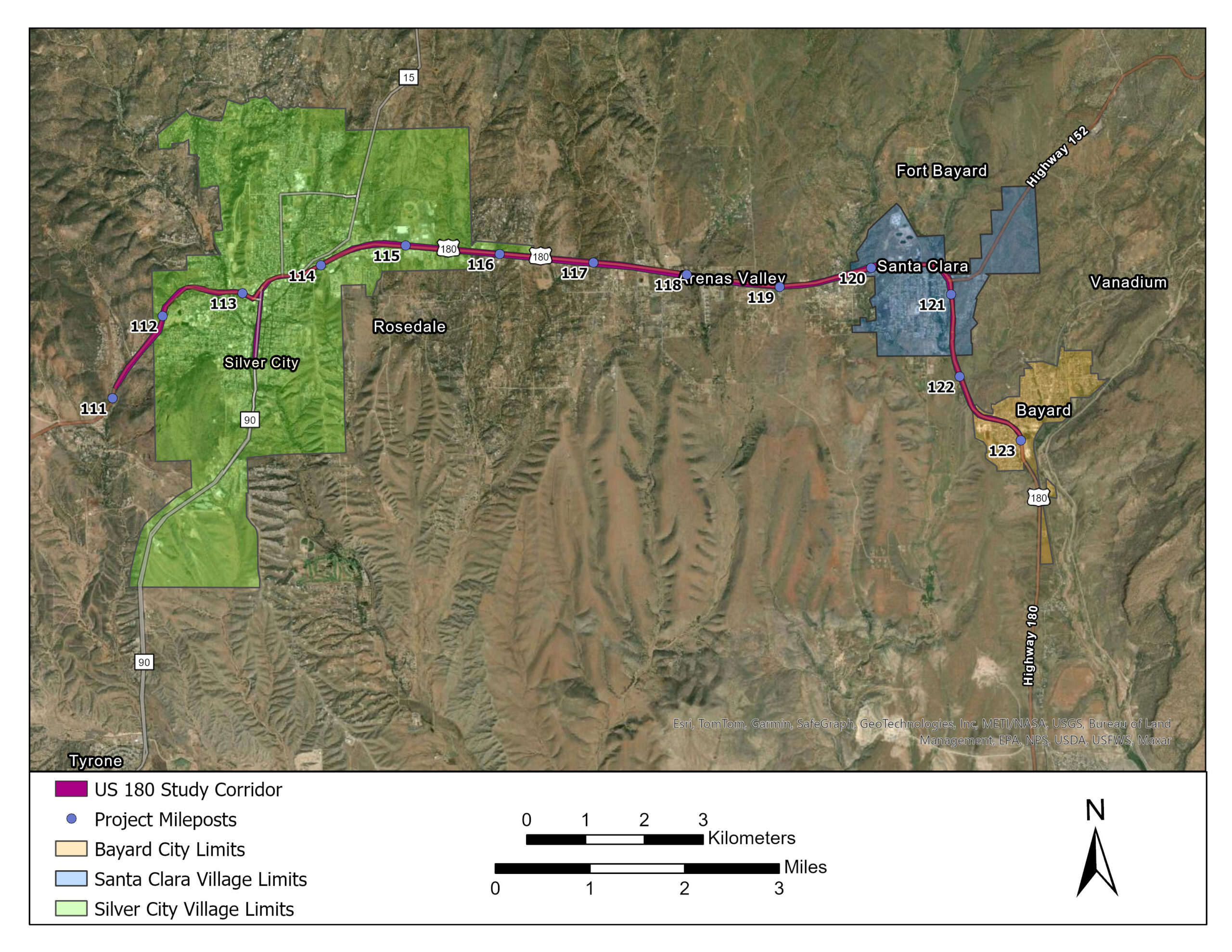
Figure 1. U.S. 180 Corridor Map between Silver City and Bayard, New Mexico.
Where are we in the Project Development Process?
Intersection improvements to the US 180 and NM 90 intersection (Phase 1) have been designed and the finalized plans will be proceeding to construction in late 2026. The broader study for the 11 mile section of US 180 (Phase 2) from Bayard to Silver City remains in the planning phase.
Phase 1 - Improving Safety at Key Intersections in Silver City
PHASE 1 - PROPOSED IMPROVEMENTS
The first phase identified for this scoping effort (Phase 1) focuses on one of Silver City’s busiest areas—the corridor surrounding the US 180/NM 90 intersection (see Figures 2 and 3). This phase includes the segment of US 180 between North Swan Street and Little Walnut Road, as well as the triangular area formed by US 180, East 14th Street, and NM 90 (North Hudson Street).
A Road Safety Audit (RSA) completed in 2023 identified the intersections of US 180 at North Hudson Street, Swan Street, and 14th Street as having the highest crash frequencies in Silver City. The audit identified several key concerns, including a high crash rate, limited pedestrian and bicycle facilities, and opportunities to improve traffic flow and overall safety. The RSA outlines a range of near-, mid-, and long-term recommendations to improve safety for motorists, bicyclists, and pedestrians.
The rendering shown in the video below illustrates one alternative currently being considered to address these concerns. This is not a final design, and the alternative may change as the project continues to develop.
The audit also highlighted several existing safety challenges, including:
- Sidewalks and crossings that don’t meet ADA (Americans with Disabilities Act) standards
- Gaps in bicycle routes or infrastructure
- Faded pavement markings
- Complicated and confusing intersection layouts
WHAT's NEXT?
The design of Phase 1 has been completed. The project is scheduled to go out to bid in September 2026, with construction currently anticipated to begin in Winter 2026/2027.
Once a contractor has been selected, additional information regarding the construction schedule, traffic impacts, temporary closures, and detours will be shared as those details become available.
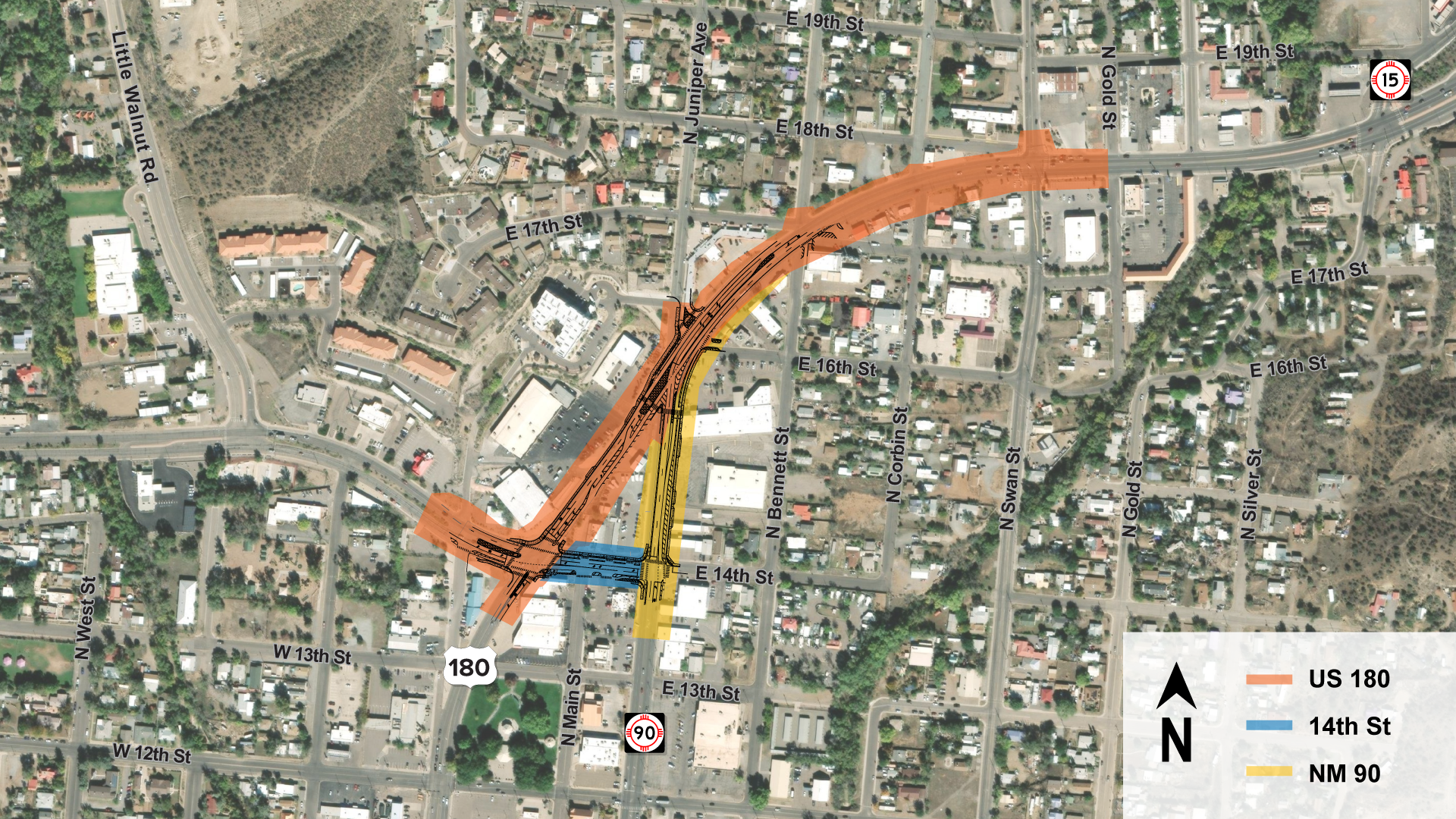
Figure 2. Phase 1 project area map at the US 180/NM 90 Intersection
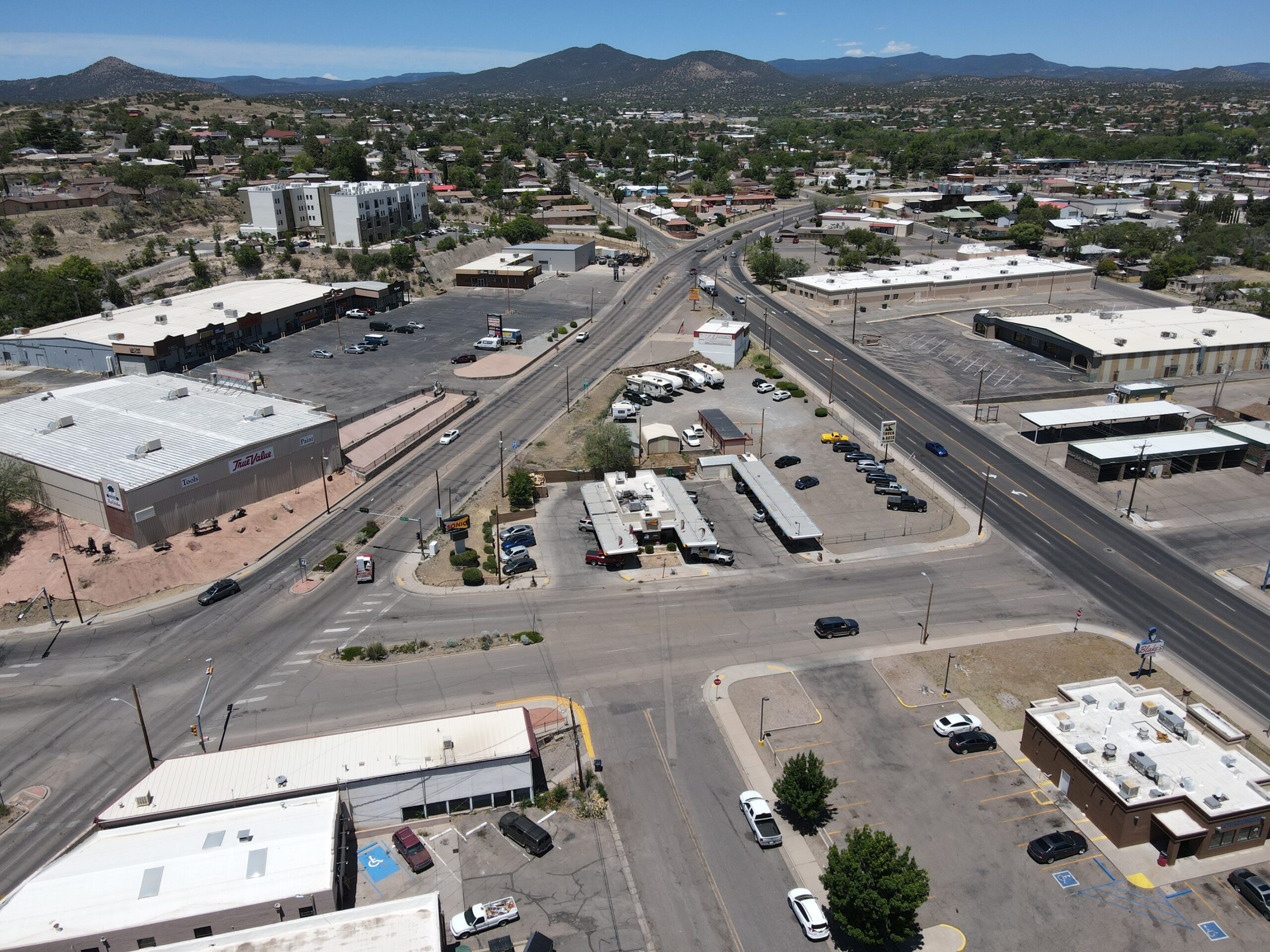
Figure 3. Aerial view of US 180, NM 90, and 14th Street within Silver City.
FREQUENTLY ASKED QUESTIONS
1. Why is NMDOT making changes to the US 180/NM 90 intersection?
The US 180/NM 90 intersection and surrounding corridor are among the busiest areas in Silver City. A Road Safety Audit (RSA) completed in 2023 identified the intersections of US 180 at NM 90 (Hudson Street), Swan Street, and 14th Street as having some of the highest crash frequencies in Silver City.
The audit also identified several safety concerns, including complicated intersection layouts, gaps in pedestrian and bicycle facilities, sidewalks and crossings that do not meet current ADA standards, and faded pavement markings.
Addressing these safety concerns supports NMDOT’s Target Zero initiative, which is focused on eliminating traffic fatalities and serious injuries on New Mexico roadways. Target Zero emphasizes a Safe System Approach that recognizes everyone has a role in roadway safety and that transportation systems should be designed to help reduce the likelihood and severity of crashes when mistakes occur.
The US 180/NM 90 Intersection Project puts these principles into action by addressing documented safety concerns and improving how motorists, pedestrians, and bicyclists move through this busy area. Improvements to intersection operations, pedestrian accessibility, bicycle facilities, crossings, lighting, pavement markings, and traffic signals are all intended to create a safer and more predictable transportation system for everyone.
Ultimately, the project is about more than improving traffic flow, it is about reducing crash risks, improving accessibility, and helping NMDOT move closer to Target Zero: zero traffic fatalities and zero serious injuries on New Mexico’s roadways.
2. Is the design shown during earlier public meetings still only a proposed alternative?
No. Earlier renderings and public involvement materials showed a proposed alternative that was still under evaluation. Since that time, NMDOT and the project team have completed additional traffic and safety analyses, considered public comments, refined the design, and completed the project development process.
The project design has now been finalized and approved by NMDOT and its federal highway partners.
3. A community update said additional review and analysis were completed on the proposed design. What was reviewed?
Public input identified concerns regarding Juniper Street access, neighborhood circulation, and emergency response. In response, the project team conducted additional traffic and safety analyses and made design refinements.
Traffic signal analyses were conducted for the US 180/14th Street, US 180/NM 90, and US 180/Swan Street intersections. These analyses modeled potential changes in traffic patterns resulting from modifications to intersection access, including traffic that could be diverted to surrounding streets.
The analyses evaluated whether motorists would continue to be able to make necessary turning movements and access surrounding side streets. The review also evaluated whether the proposed changes could create unintended safety or operational concerns.
In addition, the project team met with emergency responders to discuss whether the improvements could affect emergency response times. Emergency responders did not identify concerns regarding potential increases in response times.
4. Has NMDOT evaluated how the project could affect traffic in the neighborhoods surrounding the intersection?
Yes. Traffic circulation on surrounding roadways was specifically evaluated as part of the additional analysis.
The project team considered how changes in access could redistribute traffic and evaluated nearby intersections and alternate routes to determine whether the existing roadway system could accommodate anticipated traffic.
5. Residents expressed concern that using Swan Street and 19th Street as an alternate route could cause backups, particularly before and after school. Was this analyzed?
Yes. The traffic analyses used to model future traffic patterns included the Swan Street/19th Street alternate route.
While additional traffic is expected to use this intersection following construction of the improvements, the traffic model indicates that the existing infrastructure at Swan Street and 19th Street can accommodate the anticipated increase without causing significant backups during peak travel periods.
6. Will improvements be made to Swan Street as part of this project?
No. Improvements to Swan Street within the local neighborhood street system are not included in the current construction project.
NMDOT’s right-of-way does not extend into the local neighborhood street system. Potential traffic-calming measures or other improvements on local streets would therefore require coordination with the Town of Silver City.
NMDOT continues to coordinate with the Town regarding opportunities to improve safety and address concerns such as speeding or cut-through traffic within the neighborhood.
7. Will residents still be able to access the neighborhoods surrounding the intersection?
Yes. Although some existing access and turning movements will change with the new intersection configuration, the design maintains access to the surrounding street network through alternate routes.
Traffic analyses were conducted to evaluate these changes and determine whether vehicles would continue to be able to make the necessary movements to access surrounding streets.
8. Were emergency responders consulted about the proposed changes?
Yes. The project team met with emergency responders to specifically discuss access and whether the proposed intersection changes could increase emergency response times.
Emergency responders did not identify concerns regarding potential increases in response times associated with the project.
9. What pedestrian and bicycle safety improvements are included?
The project includes upgraded bicycle and pedestrian facilities designed to improve safety and accessibility throughout the project area.
Improvements include upgraded ADA accessibility, enhanced crosswalks, sidewalk improvements, lighting improvements, new traffic signals, and other bicycle and pedestrian facility upgrades incorporated into the final design.
10. Will the project be constructed in phases?
The intersection improvement project presented to the public will be constructed as one project rather than multiple construction phases.
Separately, an overall study is underway along US 180 from approximately milepost 111 to milepost 123. That study is evaluating other potential safety improvements along the US 180 corridor. It is separate from the upcoming intersection construction project, and no construction funding has been identified at this time for potential future projects resulting from that study.
11. How is the US 180/NM 90 Intersection Project being funded?
The current construction project is funded through a combination of state and federal transportation funds.
12. When will the project go out to bid?
The project is scheduled to go out to bid on September 18, 2026. Through the bidding process, a contractor will be selected, and the final construction contract amount will be established.
13. When is construction expected to begin?
Construction is currently anticipated to begin December 2026 to January 2027. Additional information regarding the construction schedule will be available after the project is awarded and the contractor’s schedule is established.
14. Will US 180 or the intersection be completely closed during construction?
Most construction activities are expected to be completed using single-lane closures, allowing traffic to continue traveling through the existing intersections.
However, some construction activities will require short-duration weekend closures and detours along portions of US 180. These closures are not anticipated to last longer than a few days at a time.
15. What routes will be used when detours are necessary?
When temporary closures are required, detour routes are expected to utilize NM 90, US 180, and 14th Street.
Specific closure dates, times, and detour information will be communicated to the public as construction progresses.
16. How will NMDOT minimize impacts to businesses, residents, and motorists during construction?
The majority of construction is planned using single-lane closures rather than full roadway closures. This will allow traffic to continue moving through the project area during most construction activities.
When temporary closures or detours are necessary, NMDOT and the contractor will provide advance public notification and information regarding traffic impacts and alternate routes.
17. Did public comments have an impact on the project?
Yes. Public input received during the project development process identified concerns regarding neighborhood access, Juniper Street, traffic circulation, emergency response, and potential impacts to surrounding streets.
Those concerns resulted in additional traffic and safety analyses and were considered as the project design was refined.
18. What happens next?
The design of Phase 1 is complete and has been approved. The project is scheduled to go out to bid in September 2026, with construction currently anticipated to begin in Winter 2026/2027.
Once a contractor has been selected, additional information regarding the construction schedule, traffic impacts, temporary closures, and detours will be shared as those details become available.
PUBLIC INVOLVEMENT
Public Engagement Approach
Public input is a key part of the US 180 Silver City Safety Scoping Project. Community members and local stakeholder engagement help identify safety issues along the corridor, especially for people walking and biking.
A Two‑Step Approach
This study includes a unique two‑phase engagement process:
Step 1 focused on the Silver City area, where safety needs are most urgent, particularly for pedestrians and bicyclists.
Step 2 continues to involve broader outreach to communities along the entire US 180 corridor, ensuring that local discussions connect to a larger, corridor‑wide vision.
As the scoping effort moves forward, additional engagement opportunities will continue to ensure that improvements reflect the needs and experiences of those who travel US 180.
ENGAGEMENT EVENTS HELD to DATE
December 10, 2025: A corridor‑wide open house to introduce initial concepts and gather feedback.
February 19, 2026: A neighborhood meeting held in response to strong interest in the proposed changes near US 180 and Juniper Street, especially from residents north of the US 180/NM 90 intersection. This meeting offered another chance for residents to ask questions, voice concerns, and learn more.
Fall/winter 2026 (TBD): A public meeting regarding the broader safety study
Public Involvement Summary
April 2026
What We Heard from the Community
Common themes from public comments and questions included:
- Concerns about whether proposed changes might shift traffic onto nearby streets such as Yucca, Cactus, and Swan, potentially creating new congestion or safety issues.
- Questions about how the project will support bicycle travel and what types of bike accommodations are being considered.
- Interest in whether other design options were evaluated, such as realigning the NM 90/US 180 intersection or exploring a roundabout.
- Suggestions to consider short‑term improvements—such as updated striping or adjustments to signal timing—while long‑term construction plans move forward.
- Concerns about vehicle speeds along US 180 and ideas for strategies to reduce speeding and improve overall corridor safety.
County
Grant
District
District 1
STIP Number
Status
Planning and Design
Contact
Gamaliel Zepeda
South Region Project Development Engineer
575-728-5393
PROJECT RESOURCES
New Mexico Wildlife Corridors Action Plan
Final Report, NMDOT June 2022
US 180 Safety Scoping Projects
Timeline
Summer 2025
- Conduct data collection and analysis for corridor
Fall/WINTER 2025
- PUBLIC EVENT #1 – Dec 10th
- Identify potential phases for improvement within corridor
WINTER 2025/2026
- Develop preliminary design plans for Phase 1
- NEIGHBORHOOD MEETING – Feb 19th
- Continue evaluating other key locations in the corridor
Spring 2026
- Conduct cultural resource survey for Phase 1
- Develop scoping and prioritization plan for larger corridor
Summer 2026
- Finalize design plans for Phase 1
- Complete environmental documentation for Phase 1