
RAISE THE RAILS
U.S. Highway 64 Rio Grande Gorge Bridge in Taos County, Milepost 242.5 to 242.85NMDOT Control No. 5102000
OVERVIEW
Located on U.S. Highway 64 (US 64), about eight miles west of the junction with New Mexico Highway 522, the Rio Grande Gorge Bridge offers breathtaking views of the deep canyon carved by the Rio Grande.
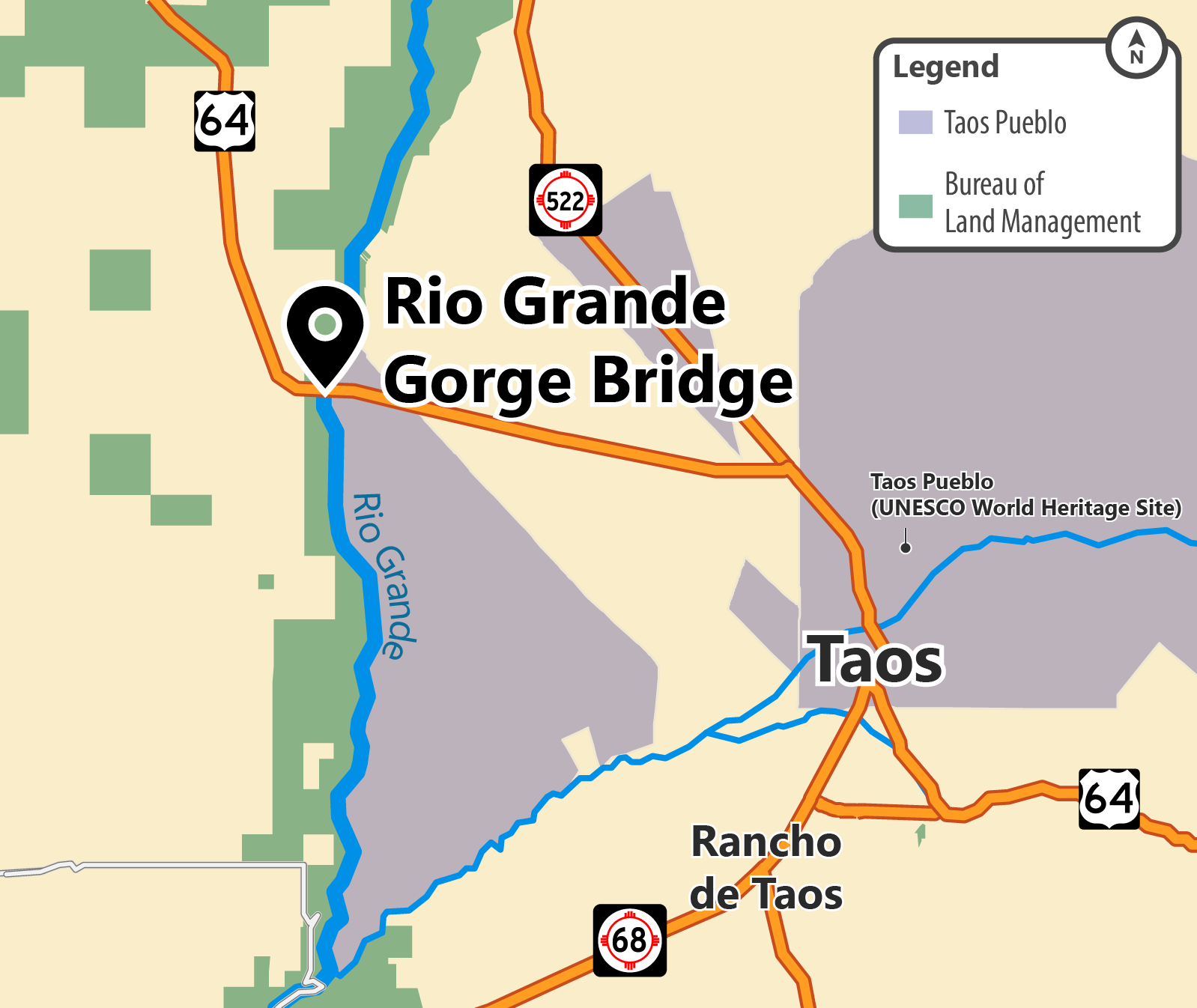
Rio Grande Gorge Bridge Project Location Map
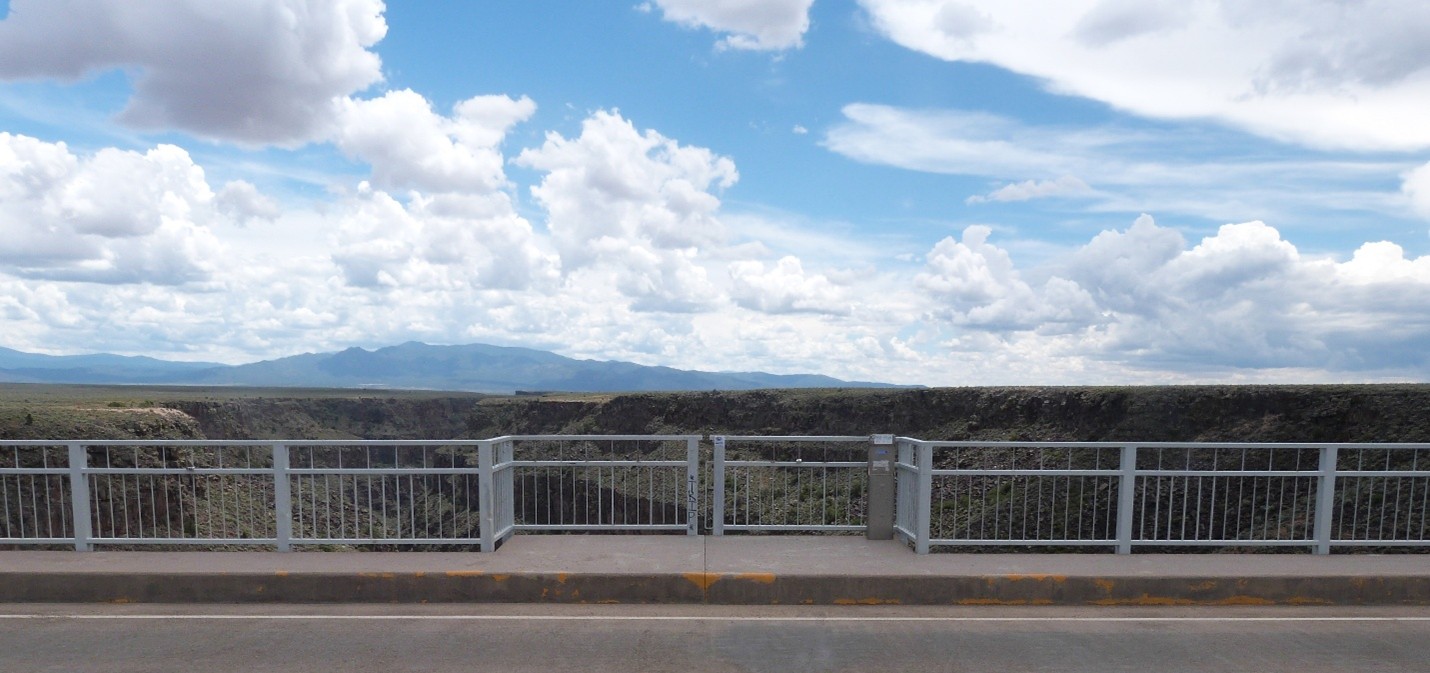
View of the existing railing along the bridge.
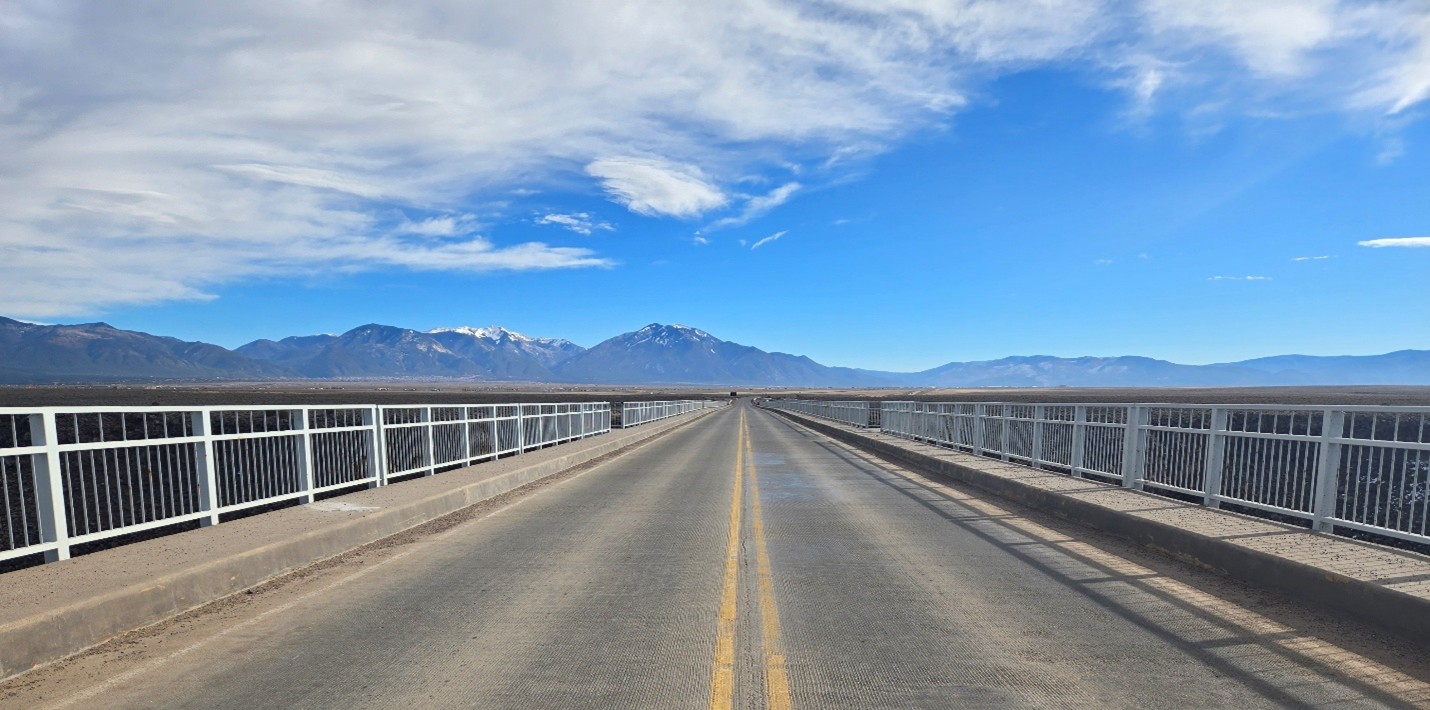
View of bridge typical section.
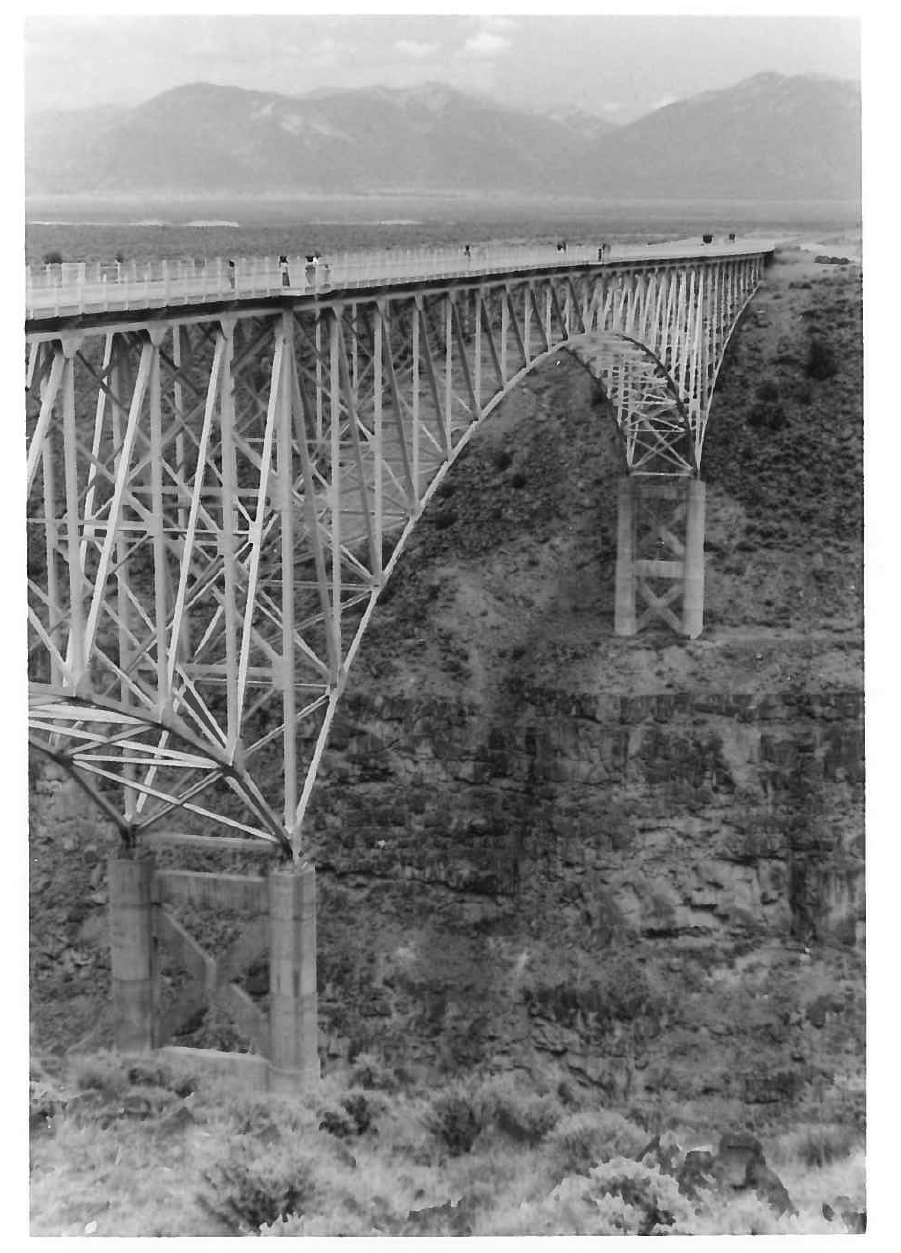
A 1980’s photograph looking eastward towards the Rio Grande Gorge Bridge.
Within a year of its opening, the bridge received national recognition from the American Institute of Steel Construction, earning first place for “Most Beautiful Steel Bridge, Long Span.”
Commitment to Safety and Community
A project is underway at the Rio Grande Gorge Bridge, reflecting a strong commitment to public safety and community well-being. The NMDOT is working to enhance safety while preserving the bridge’s historic character and structural integrity, ensuring it remains a lasting symbol of connection and safe travel. NMDOT conducted a structural feasibility study in two phases to evaluate potential improvements. The study considered structural performance, maintenance, cost, and environmental and cultural impacts.
Traffic Control Considerations
Ongoing Safety Improvements at the Rio Grande Gorge Bridge
A range of coordinated actions is underway at the Rio Grande Gorge Bridge to enhance public safety and support people in crisis.
Installation of a temporary fence extension coming soon!
A temporary fence extension will be installed along the existing railing in the coming weeks to provide additional height and improve safety. This interim measure is intended to provide added protection while NMDOT finalizes a long-term solution. The Department understands the urgency of this need and is working as quickly as possible to coordinate this effort.
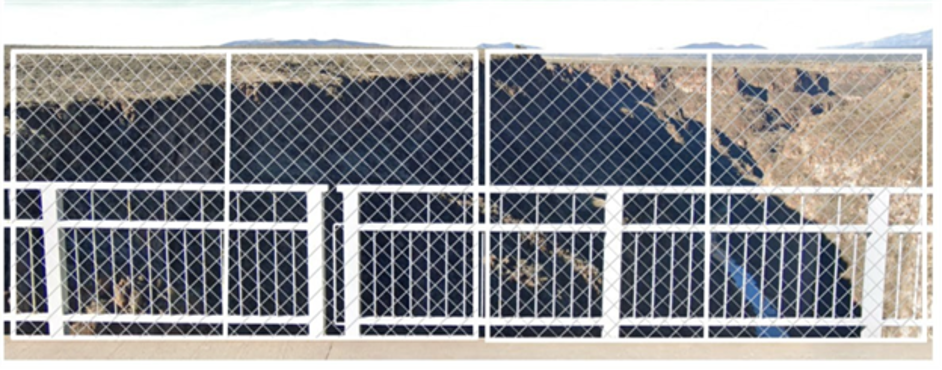
Immediate safety measures have already been put in place.
Pedestrian access to the bridge was closed on September 22, 2025, to reduce immediate risk. At the same time, contract security staffing was increased to provide 24-hour coverage, with personnel stationed at both ends of the bridge and a rover patrolling the span. Security staff also monitor the nearby rest area for safety concerns, including vandalism and individuals in crisis. Visibility has been strengthened through vehicle markings, uniforms, and patrol procedures that ensure a consistent and recognizable presence.
Public awareness and crisis resources are being strengthened.
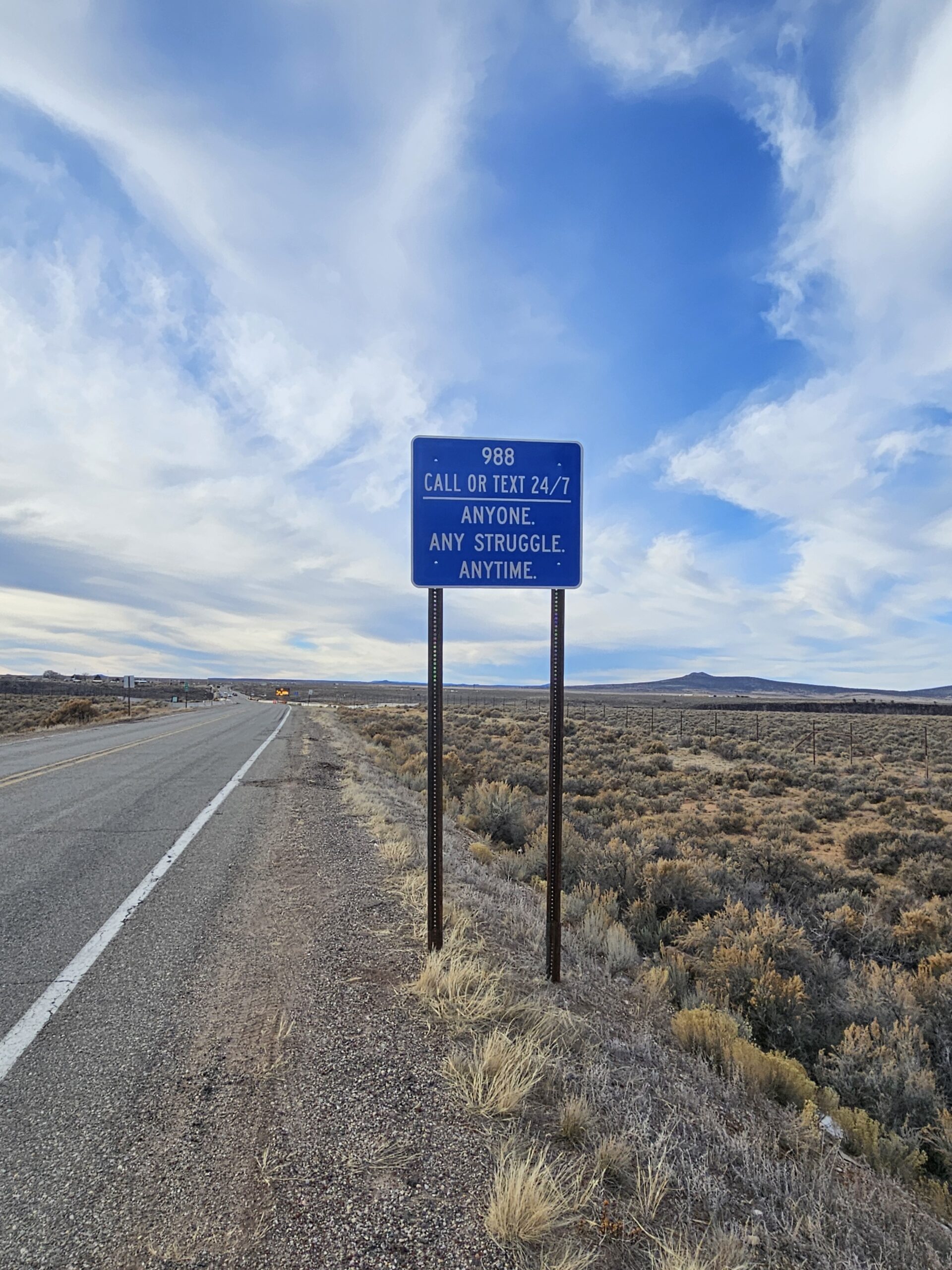
In collaboration with the New Mexico Health Care Authority, awareness signage has been installed along the bridge, along with artist-designed wraps for emergency call boxes. These call boxes feature artwork created by local artists and are presented in both English and Spanish, helping ensure messages are accessible and culturally meaningful.
The signage highlights the 988 Suicide & Crisis Lifeline, a free and confidential service available 24/7. The 988 Lifeline connects individuals with trained counselors who can help with mental health concerns, emotional distress, substance use challenges, or simply when someone needs someone to talk to. Support is always available. Blue signs with white lettering have been placed in both directions across the bridge to ensure visibility and easy access to these resources.
988 LifeLine Resources
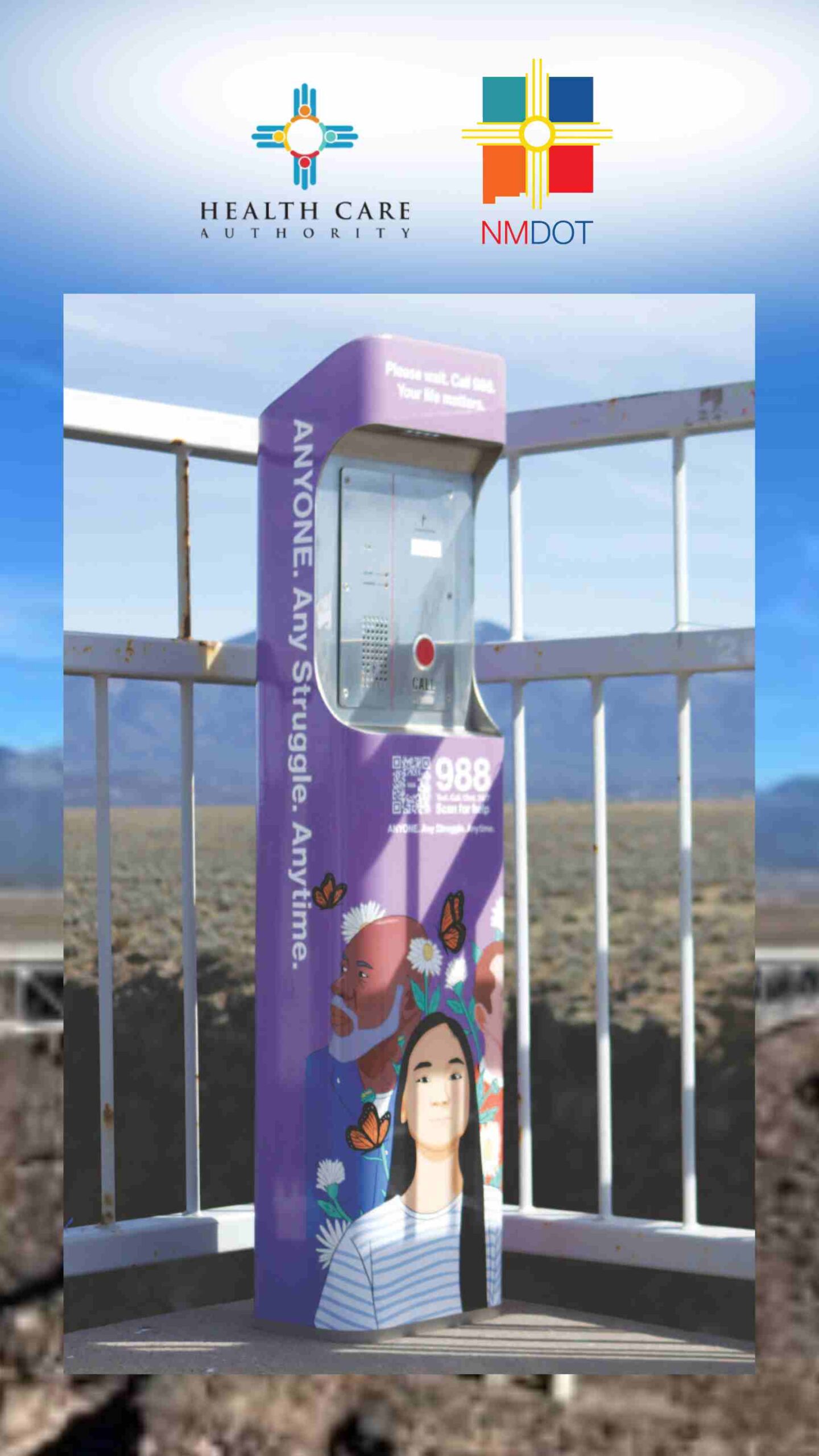
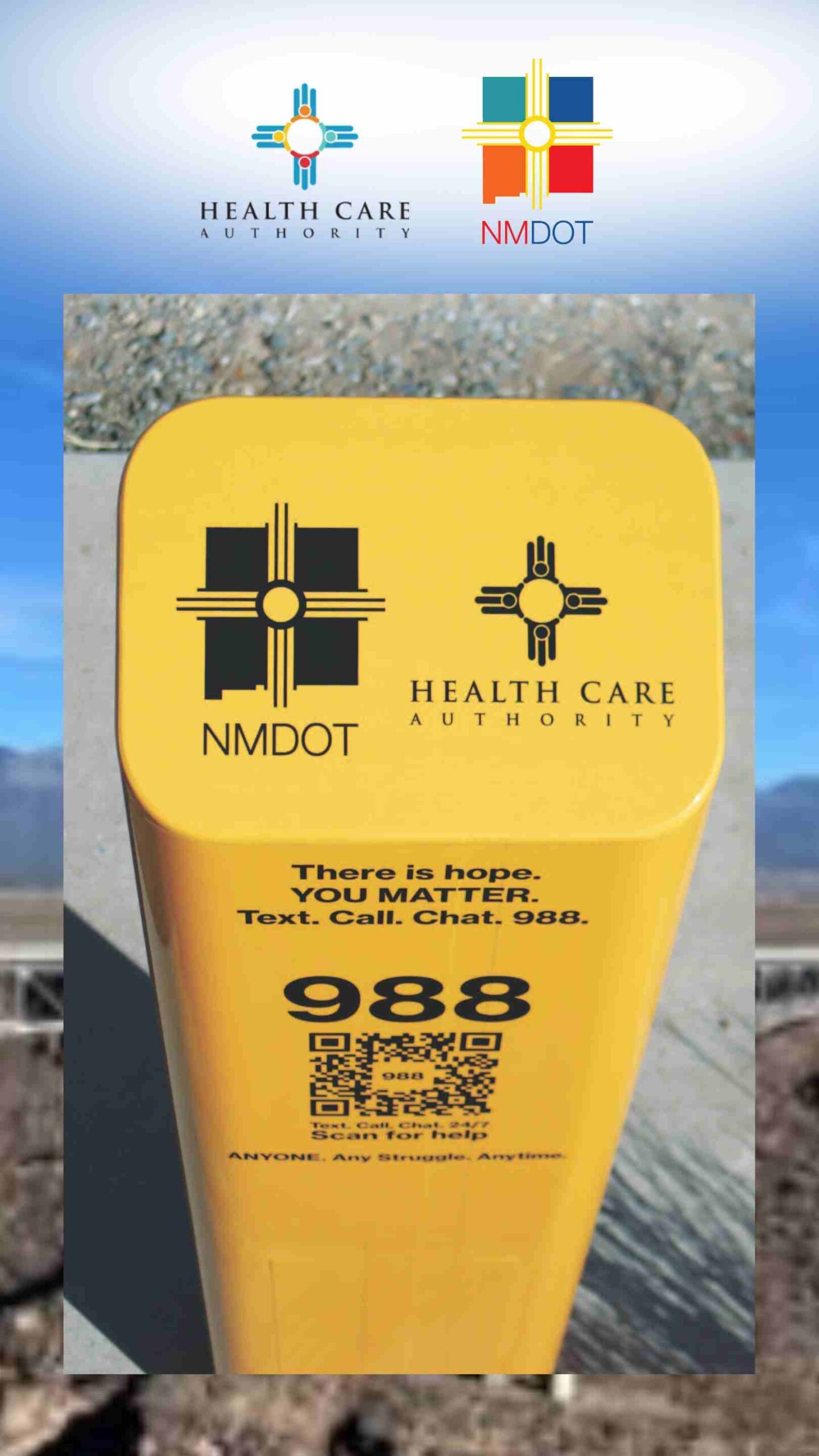
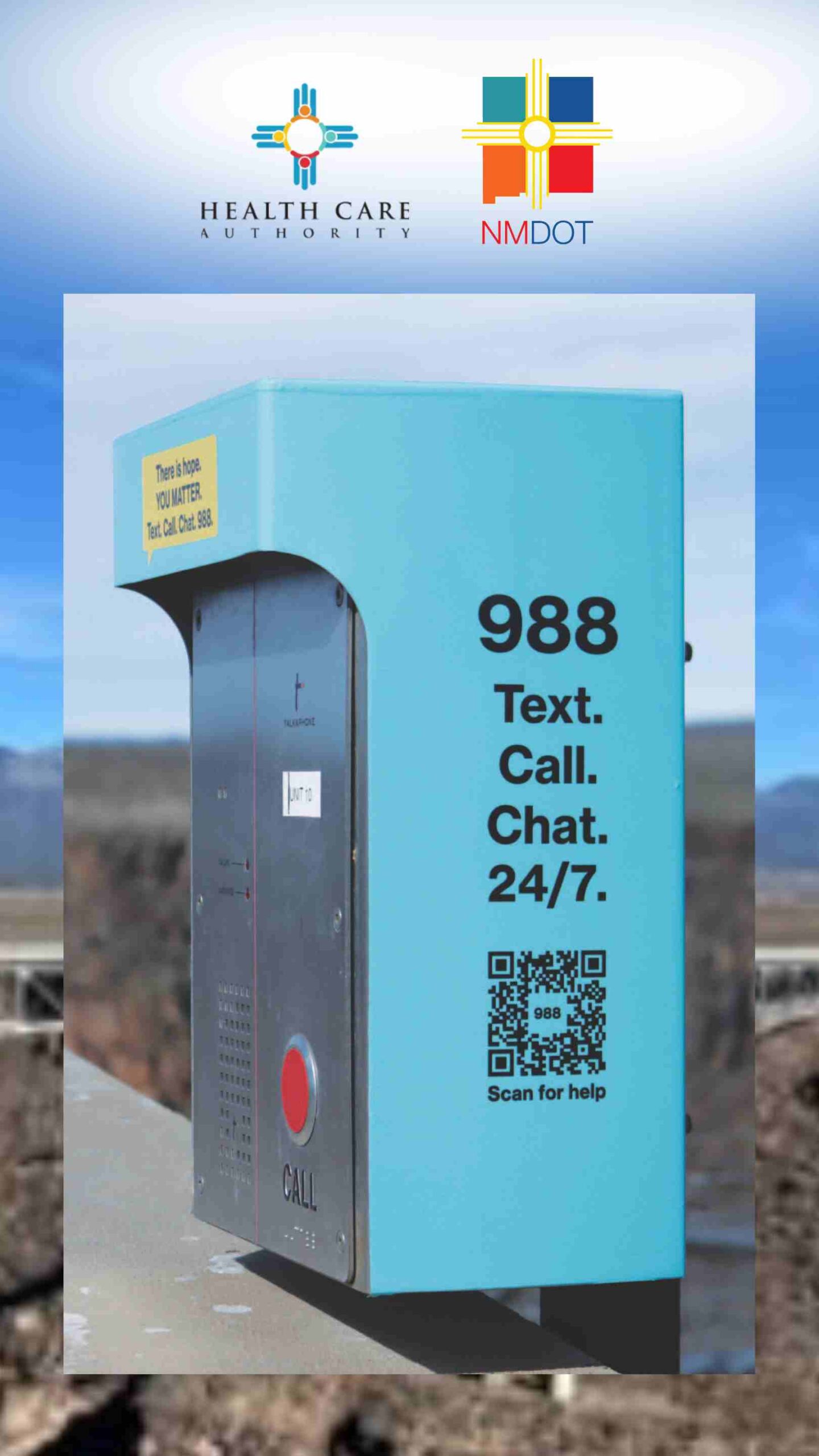
Support for people in crisis has also been expanded.
In partnership with the New Mexico Health Care Authority, mental health response strategies are being integrated into bridge operations. This includes customized Mental Health First Aid (MHFA) training tailored to the bridge environment, helping staff recognize and respond to individuals in distress. Security personnel have received nationally accredited, evidence-based training designed to support people experiencing a mental health crisis.
Collaboration and community engagement remain central.
NMDOT continues to work closely with the Taos County Sheriff’s Office, behavioral health partners, advocacy organizations, and community members through regular coordination meetings. These efforts ensure transparency, strengthen partnerships, and support shared goals of improving safety and preventing future tragedies.
Looking Ahead
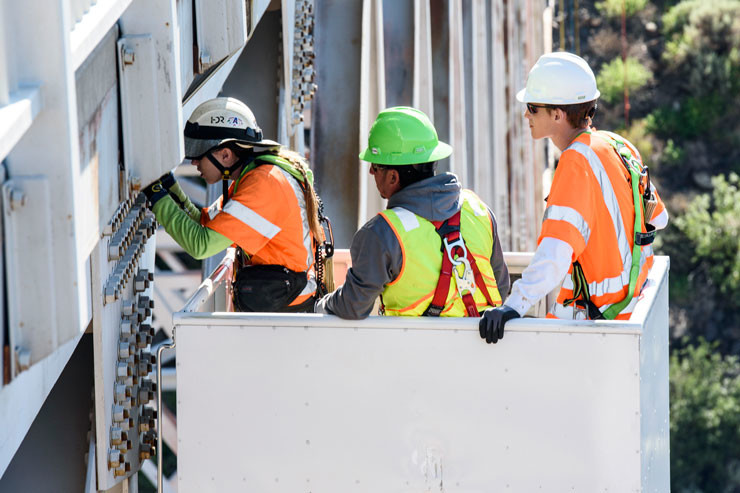
Trained inspection staff use a truck-mounted under-bridge basket to safely access and examine hard-to-reach areas of the structure.
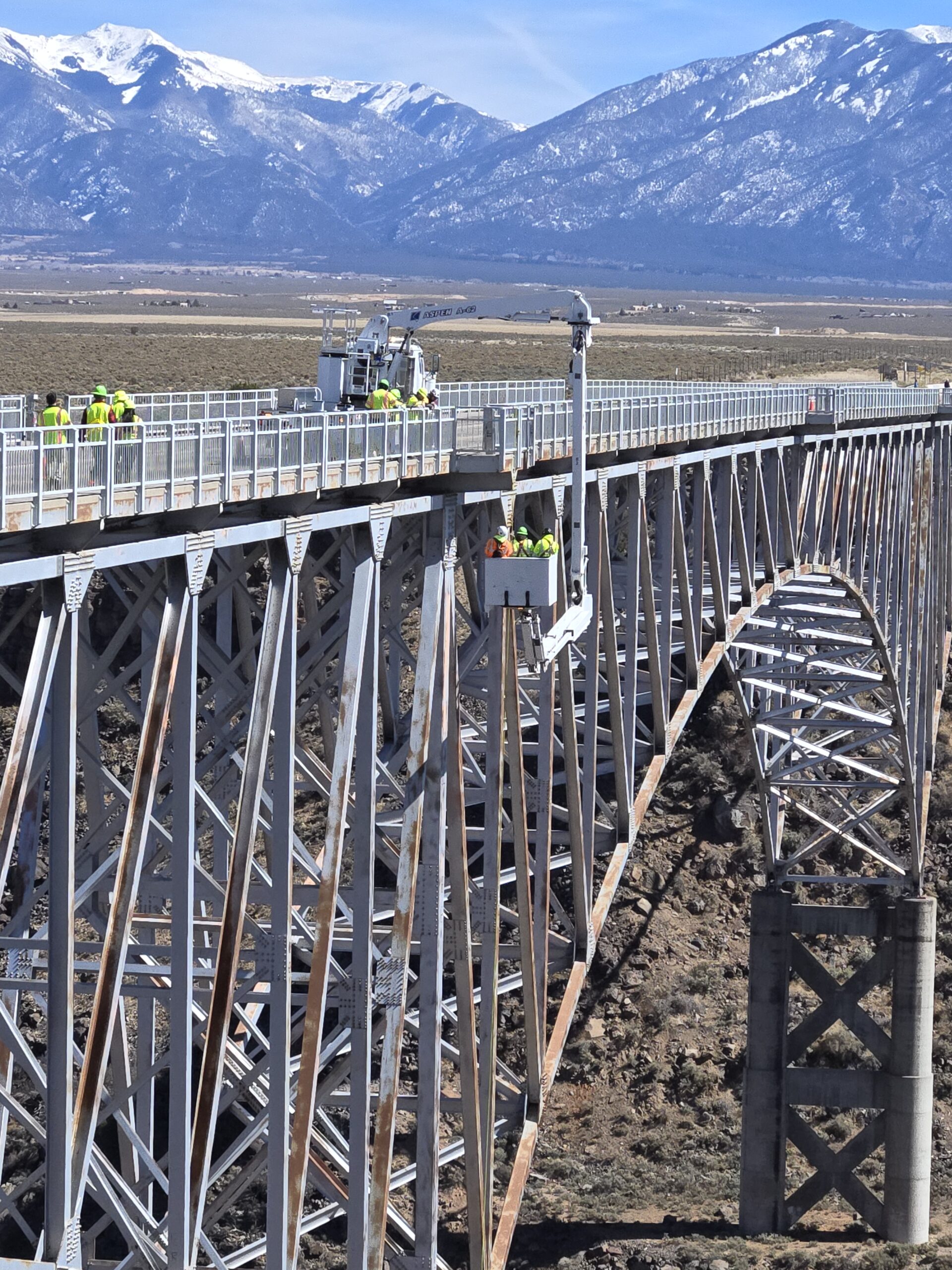
A specialized inspection team uses bridge access equipment, commonly known as a “Snooper,” to safely inspect, assess, and carry out repairs on all areas of the bridge. This equipment allows crews to reach difficult-to-access sections while maintaining worker safety and minimizing disruption to traffic.
PUBLIC INVOLVEMENT
THANK YOU FOR ATTENDING THE OPEN HOUSE!
WHEN: Thursday, May 7th, 2026
WHERE: Sagebrush Inn & Suites
(Click below to learn more about how to share comments.)
Community input is an important part of this process. We greatly appreciated your feedback on the potential improvements and traffic control options under development.
Meeting Summary
May 2026 (PDF)
Need Assistance?
For Americans with Disabilities Act (ADA) or Civil Rights Title VI accommodations and/or more information call or email Laura Rios at 480-619-3564 or at laura.rios@hdrinc.com.
Por favor comuníquese al (480) 619-3564 si desea esta informacion en Español.
County
Taos
District
District 5
STIP Number
5102000
Status
Design
Contact
Jeanne Wolfenbarger
Project Development Engineer